Moving from Consensus to Consequence in Global Fraud and Scam Prevention

Associate Director, Inclusive Financial System
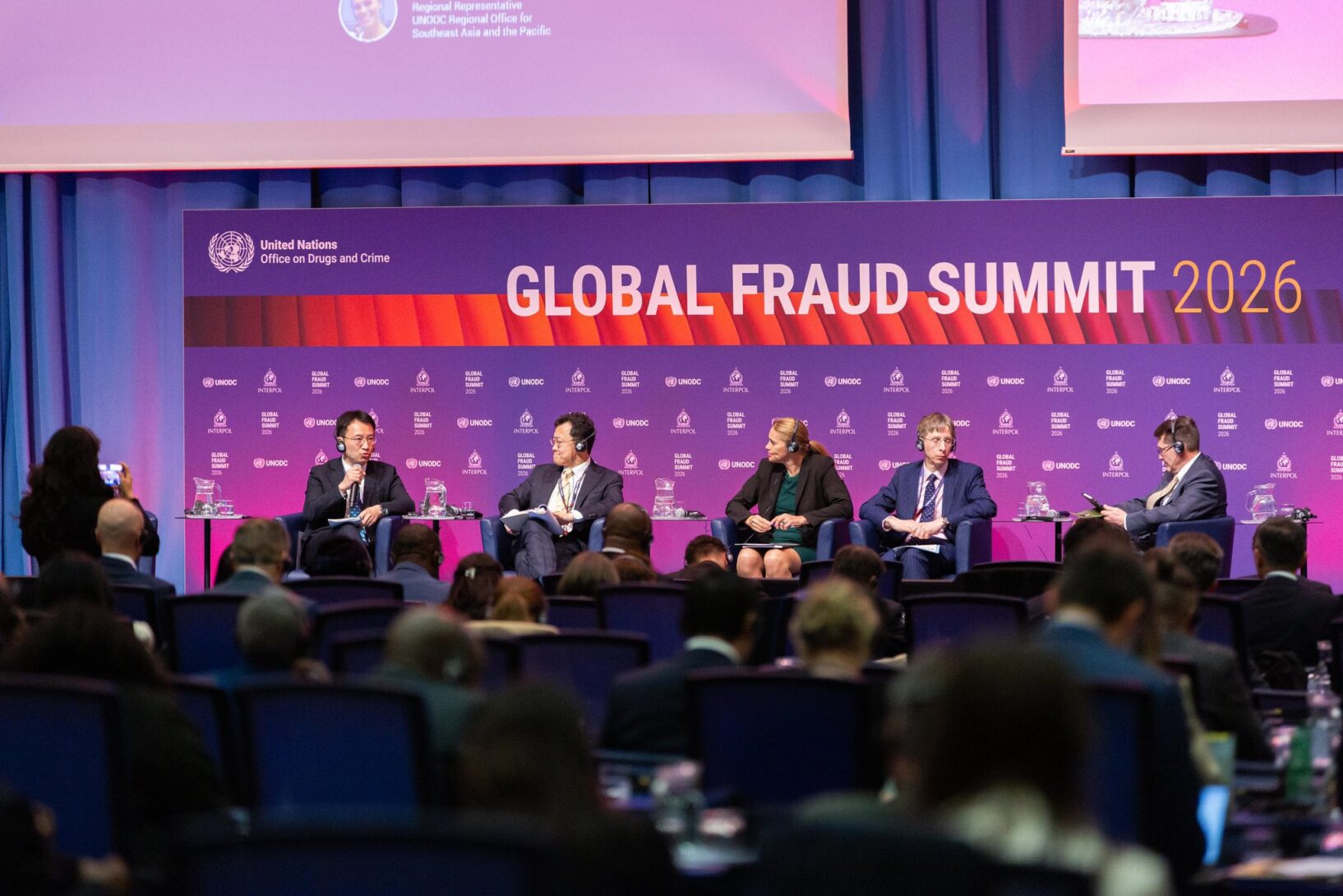
I recently spent a whirlwind few days in Vienna for the 2026 UNODC Global Fraud Summit, and if I had to summarize the atmosphere in one word, it would be momentum.
For years, a community of private, public, and social sector leaders have worked tirelessly to establish the undeniable fact that fraud and scams are a global crisis, with real people losing billions of dollars every year. In fact,when we convened the National Task Force on Fraud and Scam Prevention in 2024-2025, a significant portion of our mission was simply proving the sheer scale of the threat.
Now, in 2026, we have reached a turning point. We see clear evidence from every corner—media headlines, decisive government actions, and reports from civil society—documenting the true extent of the harm. We all should be incredibly proud of this breakthrough, as fraud and scams have officially entered the global zeitgeist. Now we get to move beyond “admiring the problem” to the messy, complicated business of solving it.
Given that we are no longer fighting just individual criminals but rather a sophisticated, multi-billion dollar business model, the global conversation has converged around three key solution areas:
While the Summit largely celebrated how far we’ve come, the hallway scuttlebutt centered on the practical hurdles that remain. Two major themes emerged that we must address if we want to move from consensus to consequence:
Overall, I was struck by how many of the private sector leaders driving innovation in scam prevention are based in or operate out of the United States. This gives us a unique opportunity—and a unique responsibility—to move swiftly and build on this global momentum.
And while the private sector is leaning in, I hope to see an even larger public sector delegation at the next summit to match the creative problem-solving of our industry leaders with the full weight of our public institutions. Aspen FSP has been encouraged by the strong signal sent by the recent Executive Order, the Scam Center Strike Force, the bipartisan Stop Scams Caucus, and Task Force lead Kate Griffin’s March testimony to the Joint Economic Committee; as well as in smaller but no less significant ways, such as the U.S. Treasury’s Financial Literacy and Education Commission (FLEC) asking questions in its Feb. 2026 RFI about how the agencies comprising the FLEC should be thinking about fraud and scam prevention.
In short, we need a whole-of-ecosystem response to undermine the criminal scam business model across the entire scam lifecycle, strengthen systems, and protect consumers. Participation and collaboration are essential. Corporate leaders need to act decisively to suppress scam activity–and Congress needs to empower their comprehensive private-sector response. Together, we’ll keep up–and win–the fight.

Join our work to build financial security for all.
Stay up to date with our latest news and events.
The post Moving from Consensus to Consequence in Global Fraud and Scam Prevention appeared first on Aspen Institute.

The National Student Clearinghouse Research Center released its 14th annual High School Benchmarks report on September 17, 2026, tracking where...

If you’re overwhelmed by education debt, you may be asking, “Can I file bankruptcy on student loans?” The answer is...

A dividend is a cash payment a company sends to shareholders, quarterly for most U.S. stocks. Reinvested dividends account for...