Roth Conversion Ladder Explained For FIRE


For anyone planning to retire before 59½, one of the biggest obstacles is accessing money locked inside traditional 401(k) and IRA accounts. Withdraw too early and you face a 10% penalty on top of ordinary income taxes.
But there is a legal workaround that the Financial Independence, Retire Early (FIRE) community has relied on for years: the Roth conversion ladder.
By systematically converting traditional retirement funds into a Roth IRA over multiple years, early retirees can create a pipeline of penalty-free withdrawals—effectively building their own tax-efficient paycheck in retirement.
The concept is straightforward. You roll or convert money from a traditional IRA or 401(k) into a Roth IRA. You pay ordinary income tax on the converted amount in the year of conversion, but no early withdrawal penalty.
The converted principal then sits in your Roth IRA and, after a 5-year waiting period, becomes available for penalty-free withdrawal regardless of your age.
The “ladder” part comes from repeating this process every year. Each annual conversion starts its own independent 5-year clock. After the initial waiting period, a new “rung” of the ladder unlocks every 12 months, giving you a recurring stream of accessible funds.
A key distinction: the 5-year rule for conversions is separate from the 5-year rule for Roth IRA earnings. Converted principal only needs to age 5 years for penalty-free access. Earnings, on the other hand, remain subject to both the 5-year rule and the age-59½ requirement.
Here’s what to know:
The 5-Year Conversion Clock. Each Roth conversion starts its own 5-year countdown. The clock begins on January 1 of the tax year in which the conversion occurs. A conversion made any time during 2026 (whether January 2 or December 31) starts its clock on January 1, 2026, and the funds become penalty-free on January 1, 2031.
No conversion limits. Unlike direct Roth IRA contributions, which are capped at $7,500 ($8,600 for those 50+) for 2026, there is no annual dollar limit on Roth conversions. You can convert $20,000 or $200,000 in a single year. The constraint is taxes: converting too much pushes you into higher brackets and defeats the purpose.
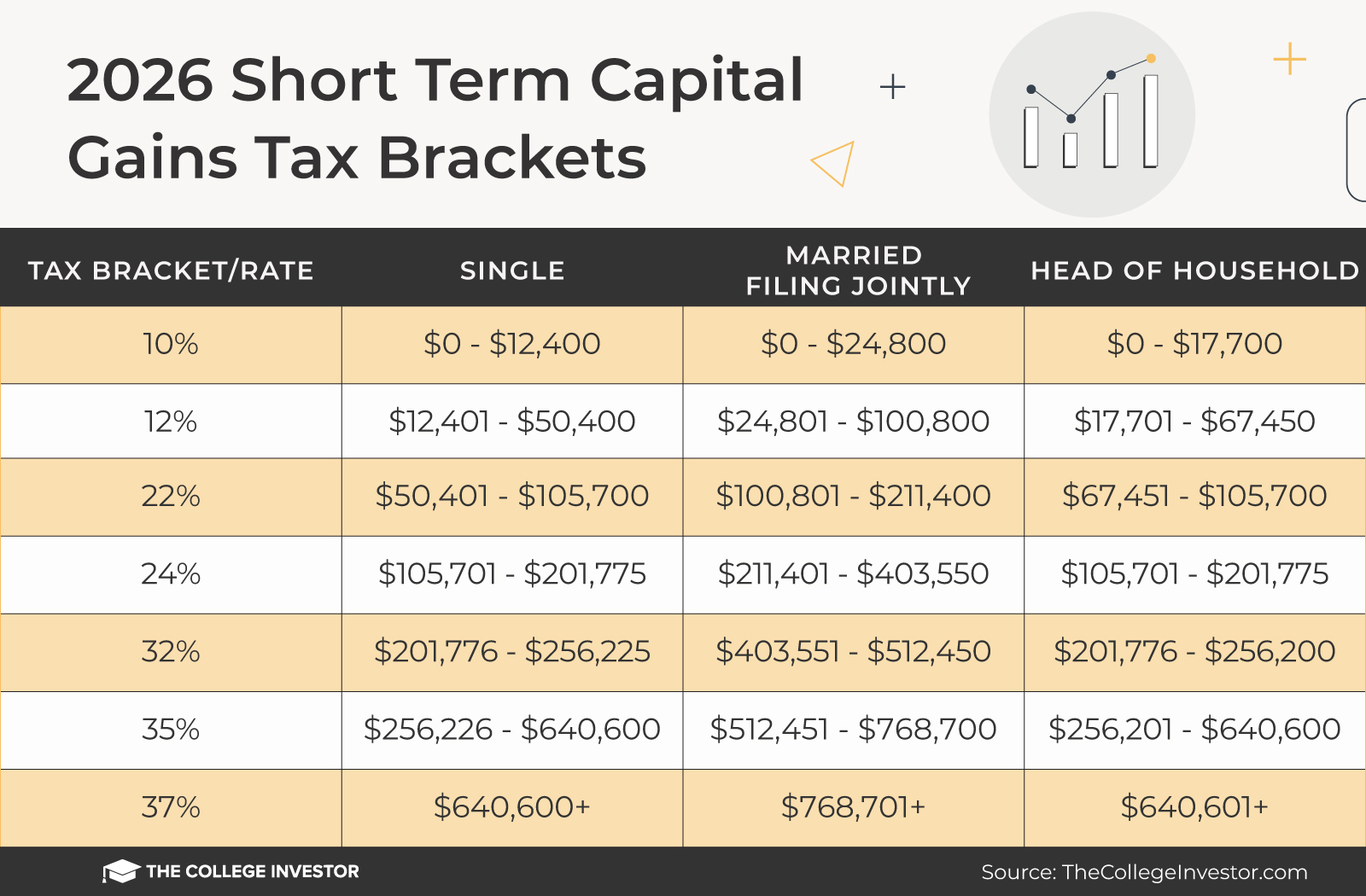
Tax bracket management. For married couples filing jointly in 2026, the 12% tax bracket tops out at $100,800 of taxable income. Most FIRE practitioners aim to fill this bracket with conversion income each year, keeping the effective tax rate low. Single filers hit the top of the 12% bracket at $50,400.
The pro-rata rule. If you have both pre-tax and after-tax (non-deductible) money in your traditional IRA, the IRS treats any conversion as a proportional mix of both. You cannot cherry-pick only the after-tax portion. To avoid this, consider rolling pre-tax IRA funds into an employer 401(k) before converting.
ACA health insurance subsidies. For early retirees who buy coverage through the Affordable Care Act marketplace, conversion income counts as modified adjusted gross income (MAGI). Converting too much in a single year can reduce or eliminate premium tax credits – sometimes costing thousands in lost subsidies. This requires year-by-year modeling.
Roth contributions are always accessible. Money you contribute directly to a Roth IRA (not converted—contributed) can be withdrawn at any time, at any age, with no penalty and no tax. This is a separate pool from conversions and has no waiting period.
Suppose you retire at 40 in 2026 with $800,000 in a traditional 401(k), $250,000 in a taxable brokerage account, and $50,000 in direct Roth IRA contributions. Your annual spending need is $50,000. Here is how the ladder takes shape:
Each year, you convert $50,000 from your traditional IRA into your Roth IRA and pay income tax on that amount. Because you have no other earned income in early retirement, the $50,000 conversion falls well within the 12% bracket (after the standard deduction), keeping your tax bill modest—roughly $3,000 to $5,000 per year depending on filing status and deductions.
The biggest challenge with a Roth conversion ladder is the 5-year gap before the first rung unlocks. During years 1 through 5, you need to pay for living expenses from other sources. Common bridge strategies include:
In our example, the retiree uses $50,000 per year from their taxable brokerage account for years 2026–2030. Starting in 2031, the 2026 Roth conversion of $50,000 unlocks, and a new conversion unlocks every year after that. The ladder is now self-sustaining.
The Roth conversion ladder is not just a tax trick – it affects how you structure your entire financial life in early retirement. Your taxable income in each conversion year determines your federal tax rate, your ACA premium subsidy, your eligibility for certain tax credits, and your state tax liability (in states that tax Roth conversions).
For a married couple converting $50,000 per year with no other income, the effective federal tax rate on that conversion is roughly 6–8% after the standard deduction. Compare that to withdrawing the same amount from a traditional IRA after age 59½ when Social Security, pensions, or required minimum distributions may push the marginal rate to 22% or higher. The tax savings over a 20-year retirement can easily exceed $100,000.
The tradeoff is complexity. You need to track each conversion year separately, maintain bridge funding, coordinate with healthcare subsidy calculations, and plan around state-specific rules.
Several states (including California, New Jersey, and Minnesota) fully tax Roth conversions, while others like Florida and Texas have no state income tax at all.
Don’t Miss These Other Stories:

The National Student Clearinghouse Research Center released its 14th annual High School Benchmarks report on September 17, 2026, tracking where...

If you’re overwhelmed by education debt, you may be asking, “Can I file bankruptcy on student loans?” The answer is...

A dividend is a cash payment a company sends to shareholders, quarterly for most U.S. stocks. Reinvested dividends account for...