Who Is Eligible to Receive a Pell Grant?


A Federal Pell Grant is need-based financial aid from the U.S. Department of Education designed to help eligible students pay for college or career school. Unlike a loan, a Pell Grant usually does not have to be repaid, although repayment may be required in certain situations. See Federal Student Aid’s overview of grants.
To be eligible for a Pell Grant, you generally must:
Schools use information from your FAFSA, including your Student Aid Index (SAI), to determine your Pell Grant eligibility and award amount. Your SAI is an eligibility index, not the amount of aid you will receive or the amount your family is expected to pay. Federal Student Aid explains the Student Aid Index.
So, who qualifies for Pell Grants? Pell Grants are usually awarded to undergraduate students who have exceptional financial need and have not earned a bachelor’s, graduate, or professional degree. Limited exceptions may apply to students in certain postbaccalaureate teacher certification or eligible workforce programs. See Federal Student Aid’s Pell Grant eligibility guidance.
You also generally must meet federal student aid requirements such as:
Federal Student Aid lists additional eligibility requirements and exceptions that may apply depending on a student’s circumstances.
For the 2026–27 award year, the maximum Federal Pell Grant award is $7,395. The actual amount a student receives depends on factors including SAI, cost of attendance, enrollment status, program length, and remaining lifetime Pell Grant eligibility.
Pell Grants are usually available to undergraduate students who have not earned a bachelor’s, graduate, or professional degree. Some limited exceptions apply, including certain eligible workforce programs and postbaccalaureate teacher certification programs.
Enrollment status also affects the amount you may receive:
Pell Grant amounts are not determined by enrollment status alone. Cost of attendance, SAI, program length, and remaining Pell eligibility can also affect the final amount.
There is no single income cutoff that determines eligibility for all federal student aid. Federal Student Aid notes that multiple financial and household factors are considered rather than using one universal income threshold. See federal student aid eligibility.
For Pell Grants specifically, eligibility is determined through federal formulas using FAFSA information. Factors can include:
Your school also considers factors such as cost of attendance when determining your Pell Grant amount.
Because there is no single income cutoff that applies to everyone, it can still be worth completing the FAFSA even if you are unsure whether your income will qualify you for need-based aid.
The answer has two parts:
After your FAFSA is processed, your FAFSA Submission Summary can show information such as your SAI and an estimate of your federal student aid eligibility. Your school provides the official financial aid offer.
You might not qualify for a Pell Grant if:
Pell Grant eligibility is generally limited to the equivalent of 12 full-time terms, or about six years.
Sometimes a student may appear ineligible because required information is missing or an issue still needs to be resolved.
Examples can include:
These situations are different from simply having too much income to qualify. Some may be resolved by completing missing requirements or working with the school’s financial aid office.
A basic application process looks like this:
You generally must be enrolled or accepted for enrollment as a regular student in an eligible program before receiving federal student aid.
After submitting your FAFSA:
Your SAI is not itself your Pell Grant amount, so the number on your FAFSA Submission Summary should not be treated as a final award figure.
Even if you initially qualify for a Pell Grant, there are additional limits and ongoing requirements to keep in mind.
You may qualify for a Pell Grant if you:
Your school makes the final determination using your FAFSA information and federal Pell Grant rules.
Even if you’re unsure whether you qualify, completing the FAFSA is the main way to find out what federal student aid may be available to you.
Review your FAFSA Submission Summary for your SAI and estimated eligibility, then review your school’s financial aid offer for the official Pell Grant amount. If information is missing or your eligibility is unclear, the school’s financial aid office can help explain what still needs to be completed.
The content provided is intended for informational purposes only. Estimates or statements contained within may be based on prior results or from third parties. The views expressed in these materials are those of the author and may not reflect the view of National Debt Relief. We make no guarantees that the information contained on this site will be accurate or applicable and results may vary depending on individual situations. Contact a financial and/or tax professional regarding your specific financial and tax situation. Please visit our terms of service for full terms governing the use this site.
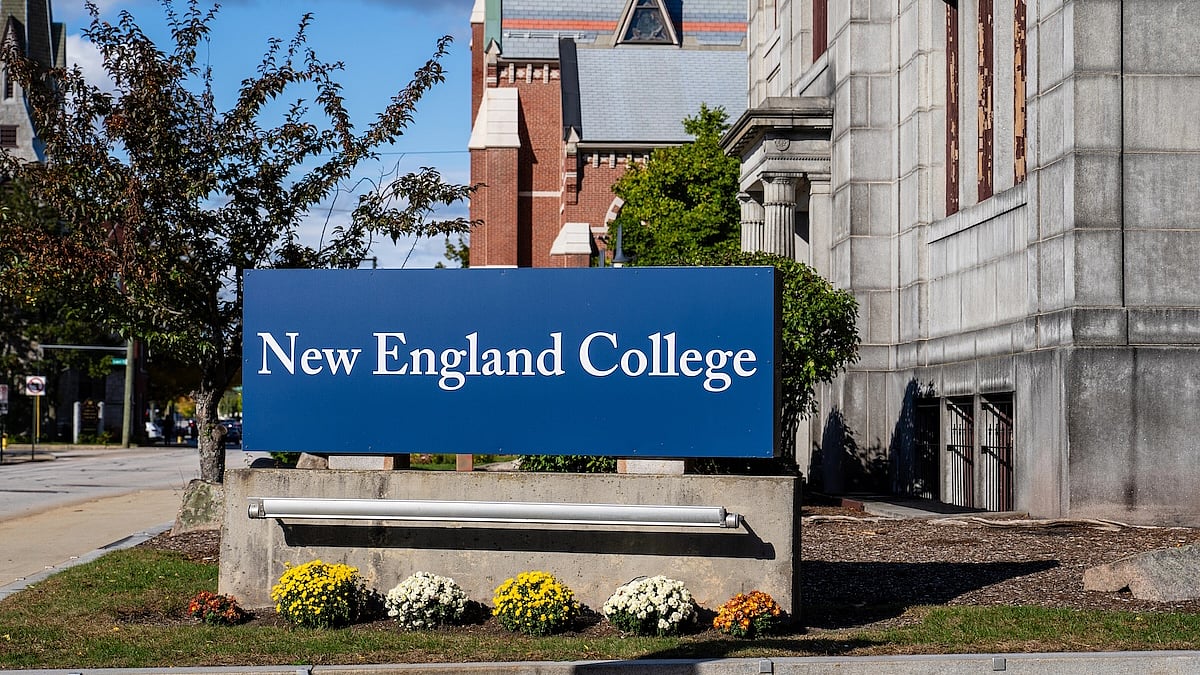
Key Points New England College (NEC) will charge eligible graduates of 39 New Hampshire high schools $12,000 a year in...
What Is a Pell Grant? A Federal Pell Grant is need-based financial aid from the U.S. Department of Education designed...

The Question My wife and I each have about $75,000 in student loans, and both are in forbearance. Before the...