What Youth250: Our Declaration Taught Me About Youth Leadership

What actually produces a leader? It’s a question I return to constantly in my work at the Center for Rising Generations (CRG), and one I carried with me at Youth250: Our Declaration, a conference marking the United States’ 250th anniversary, designed and led entirely by young people. It brought together youth leaders from across the country to deliberate on civic questions and model a different kind of democratic participation.
I attended Youth250: Our Declaration not just as an observer, but as someone actively building infrastructure for youth leadership at Aspen, and carrying questions from that work into the room. I went in expecting to find young people shaped by programs, schools, and intentional mentorship. What I learned instead was more instructive and more humbling than I anticipated. This piece is for the folks who design systems meant to serve young leaders, and who may be unintentionally designing them wrong.
Sitting with this question, I spoke with a few young leaders: a young man who grew up in Mexico City who stepped up because no one else was paying attention; a young woman from rural Pennsylvania rooted so deeply in community that service was inevitable; and a young man from Reagan Country, California, who found his values quietly diverging from the town around him. Leadership, these three suggested, has many origins, but schools appeared in almost none of their leadership origin stories. So what drove them?
For Santiago Mayer (Voters of Tomorrow), the necessity of civic engagement, coupled with its absence, compelled him to lead. For Gina Bevigla (F. M. Kirby Foundation), rootedness drove her entry into civic life. Service was cultural, communal, and infused with faith — it was an inevitable part of her upbringing. For Alex Edgar (Made By Us), it was the awakening of political identity after seeing the friction expressed in his hometown over identity politics. His motivation came from a belief that everyone deserves to thrive, even when the surrounding environment suggests otherwise. Listening to these narrations around purpose, I reflected on my own experience, having grown up in rural Appalachia as a Pakistani-American Muslim. Leadership was certainly not a predictable part of growing up, but it was a journey carefully crafted through a few different players: my family’s push for socioeconomic mobility, my siblings’ consistent pushes to think critically, and, unfortunately, my lack of trust in my community’s existing leadership. None of us were recruited into leadership, but felt a pull by something internal — whether that be urgency, belonging, moral clarity, or persistence.
Having left my hometown after serving as the Student Member of the Board of Education at the onset of the COVID-19 pandemic and the resurgence of the Black Lives Matter movement, I admit, I lost motivation in the power of institutional change. It was a lack of conviction – a feeling that the systems I served were designed to consume my energy rather than sustain it – that pushed me away. I saw a misalignment between the “leadership” in boardrooms and the real-world crises outside. During my college years, however, my drive to lead returned as I studied the history of social movements and saw a dearth of people effectively using their education to affect tangible change. My perception of the world had changed from seeing leadership as a position to seeing it as a persistent necessity, and so had I.
Prior to attending Youth250: Our Declaration, I assumed that most youth leaders were primed for leadership through active mentorship from a teacher or coach at school. None of them pointed to a curriculum. What they named were relationships: a teacher who delegated responsibility and in doing so conveyed trust, a community that made service feel inevitable, a peer whose leadership became a model. But what role did school play? Where school appeared in their stories at all, it was as a pathway, not an incubator: a place that occasionally connected them to something larger, but rarely cultivated the thing itself. Low expectations ran quietly through every account. These young people led not because the system believed in them, but because someone within it, whether that be a teacher, a coach, or a peer, briefly did.
I had a complicated relationship with school. I had positive, generative relationships with my teachers, but not my peers. As a result, I was primed for specific opportunities of leadership but never had the space to practice them. I grew up believing that education was the cornerstone of my identity — and mistook that for centering the classroom. I found, however, that I learned the most when connecting with diverse peoples. It was through leaving the classroom, the school itself, and connecting with other intergenerational leaders — through mock trial, the Maryland Association of Student Council, or the Emerging Rural Scholars program at the University of Chicago — that leadership as a practice became part of my identity.
How do these leaders stay motivated when the world we grew up believing in has shifted beneath us? This, perhaps, is a generational question — but in a headline-dominated society, particularly in the paradoxical moment of celebrating 250 years of American democracy alongside significant political instability at home and abroad, we must ask it again. What emerged across all three was a version of the same answer: trust. Trust in peers and digital coalitions as proof that collective action still works. Trust rooted in community so deep that performative activism gives way to durable values. And a generative doubt, not quite cynicism, that the world as it is need not be the world as it stays, sustained by older leaders actively creating pathways for young people to lead. Youth250: Our Declaration as a space existed precisely because of that shared, intergenerational belief.
Leadership in all four accounts formed in digital coalitions, faith communities, scouting, mock trial, peer mentorship; the margins of school, not its center. But if third spaces are shrinking, peer influence is undervalued, and digital organizing is filling the vacuum, what role should schools play in connecting students to these ecosystems rather than competing with them?
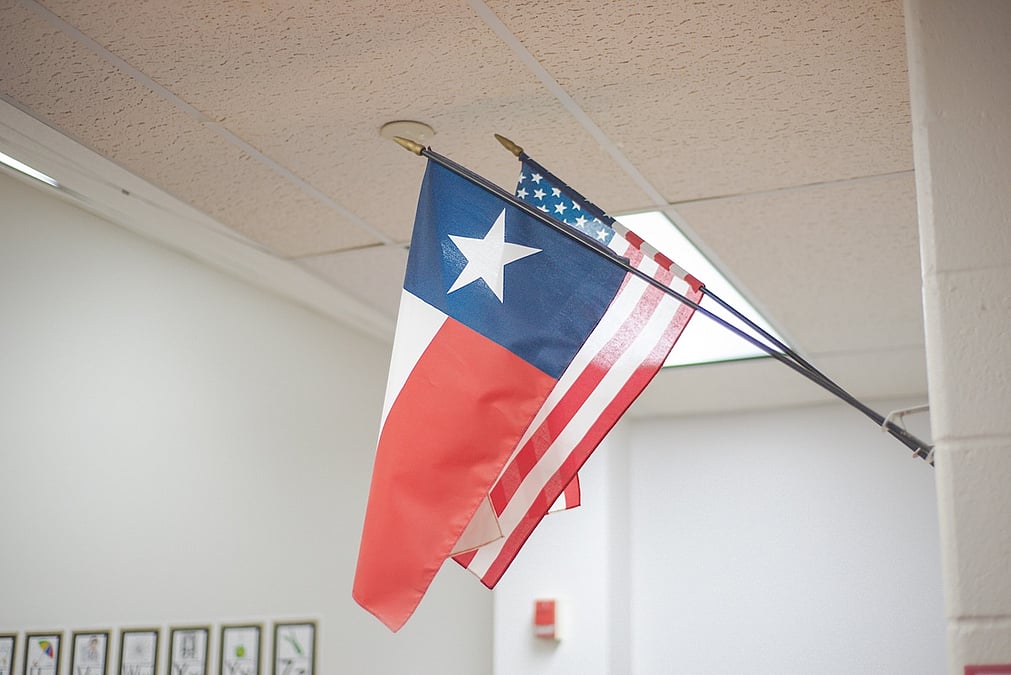
Texas public schools lost about 76,000 students in the 2025-26 school year, the first enrollment decline outside the Covid-19 pandemic...

If you’re considering a home equity loan and wondering whether you can deduct the interest on your taxes, the answer...

Articles Single-family rentals (SFR) now house 41% of the U.S. renter population, according to Rentometer Mid-Year...