These neighbors launched a movement of care from their front porch

This story was originally published on Weave’s newsletter. Every week, you’ll get resources on how to weave our communities and restore social trust.
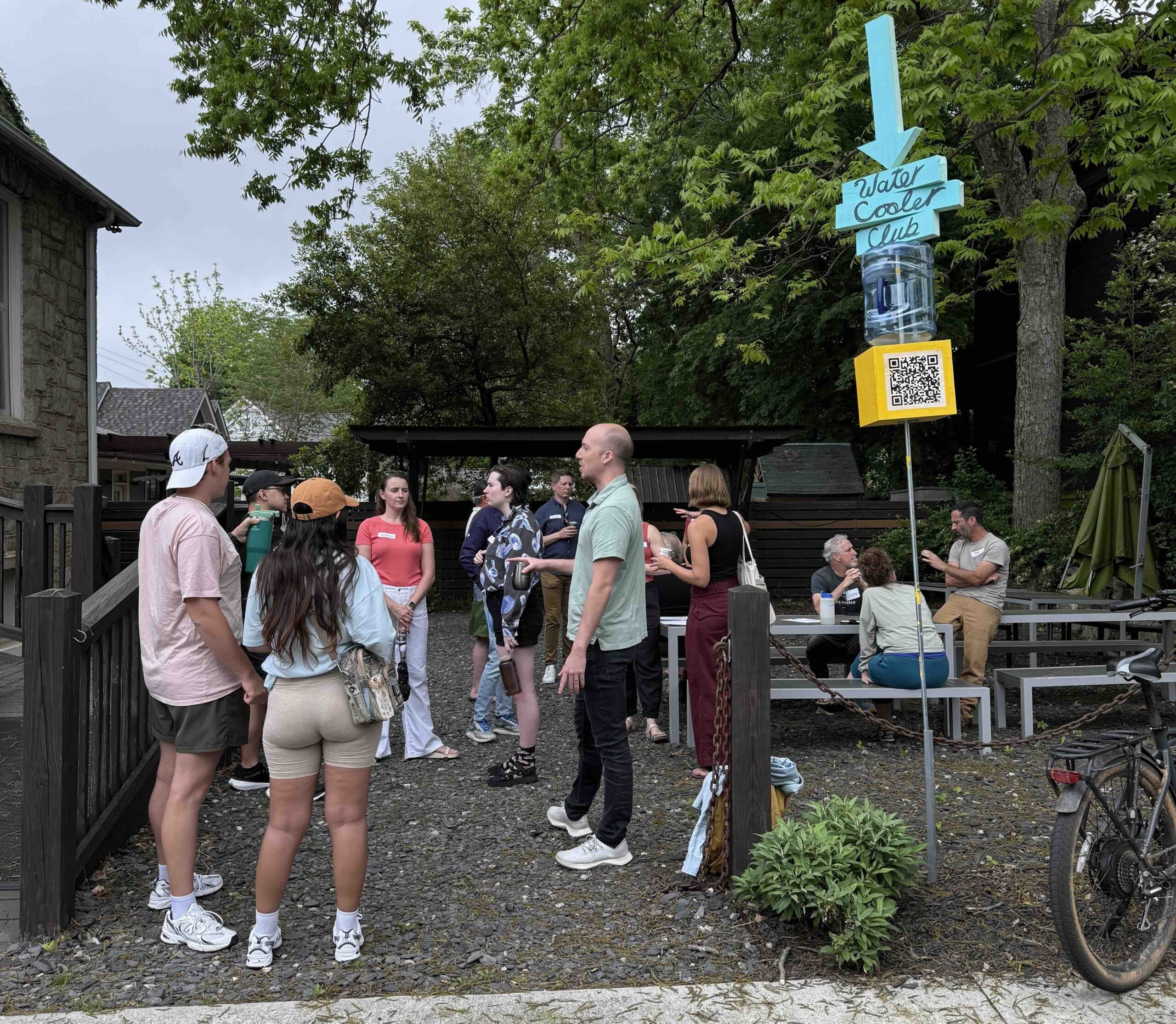
In the Reynoldstown neighborhood of Atlanta, Ga., every month a group of folks gather on a patio behind an architect’s office building and have conversations around a water cooler. They talk about everything, from comic books to vacations and pets. The catch: none of these folks work together.
Some are remote workers; others are stay-at-home parents or new to the neighborhood. The only thing they have in common is that they live within walking distance of each other and decided to answer the call to join the “Water Cooler Club” from a group called the Reynoldstown Rangers.
The Rangers are a group of folks that saw a need to become stewards of their neighborhood. They describe themselves on their website as: “question askers, dot connectors, and team builders. We shape and share the tools that build resilient communities.” They specialize in “porch-scale neighboring”—fostering relationships among small circles of 8 to 16 households, says John Gibson, one of the founders of the Reynoldstown Rangers.
The group started small, with just six folks gathering on a front porch in 2023. “We asked ourselves, what if a neighborhood was like a national park and we had something akin to park rangers. People that provide a caring structure and help others understand a place, systems, and history, and how their actions might affect the place,” he says.
Their first project was rooted in the history of the neighborhood. For several decades, there had been a group of quilters that met three times a week to create beautiful tapestries together. The group stopped meeting in the early 2000s, but from conversations with neighbors, the Rangers knew that many of the children of the original quilters felt a deep pride in their art. “As gardeners, Christopher and I knew the best way to predict what would thrive – you pay attention to what has flourished before. Quilting had grown here once; it could grow again. So before anything else, we launched The New Reynoldstown Quilters,” wrote Gibson in “ Birthing The Rangers: An Oral History.”
Since then, they have implemented several new initiatives, like the “Water Cooler Club” or the “Trash Church,” where every Sunday families spend an hour walking the neighborhood picking up litter. They aim to cover every single street in the neighborhood by the end of the year. They save the most unique items they pick up for a permanent collection to show that “any place you pay attention to is capable of yielding extraordinary things.”
Along the Atlanta Beltline, the Rangers installed the “Museum of Reynoldstown”—a facade glued to the front of a building. It opened with 64 black-and-white portraits of neighbors sitting on their porches. “We believe that the core of neighboring is recognition,” Gibson explains. “It is the shift that goes from seeing people to seeing a person.”
Now, they are testing a new tool to make their neighborhood-weaving portable: the “Actually Useful Neighbor Kit.” It’s a metal cookie tin passed among a small circle of households. Inside is a nine-week analog guide with four activities. The first involves mapping the local infrastructure and non-human neighbors, like the local hawks and coyotes. The second behavior is sharing unprogrammed space, which means just hanging out in plain sight on a driveway without treating it as a party or potluck. The third is exchanging small homemade gifts passed inside the cookie tin. Finally, they compile “Hello Pages,” specifically avoiding typical emergency contacts, and instead asking neighbors what they could teach someone else or what they would like to borrow.
The kit is intentionally small and hyper-local. Even the initial invitation gives neighbors a clear option to opt out, because “even when people are on the sidelines, they’re still in the game,” Gibson says. “Just by making that optimistic act, just by the fact of showing up as an individual, you have already started to change the world.”
True to form, the Rangers have written a handy field guide called the “The Bona Fide Ranger’s Guide.” You can read it here.

Who you choose for your checking and savings account is important because changing it after you’ve set up your account...
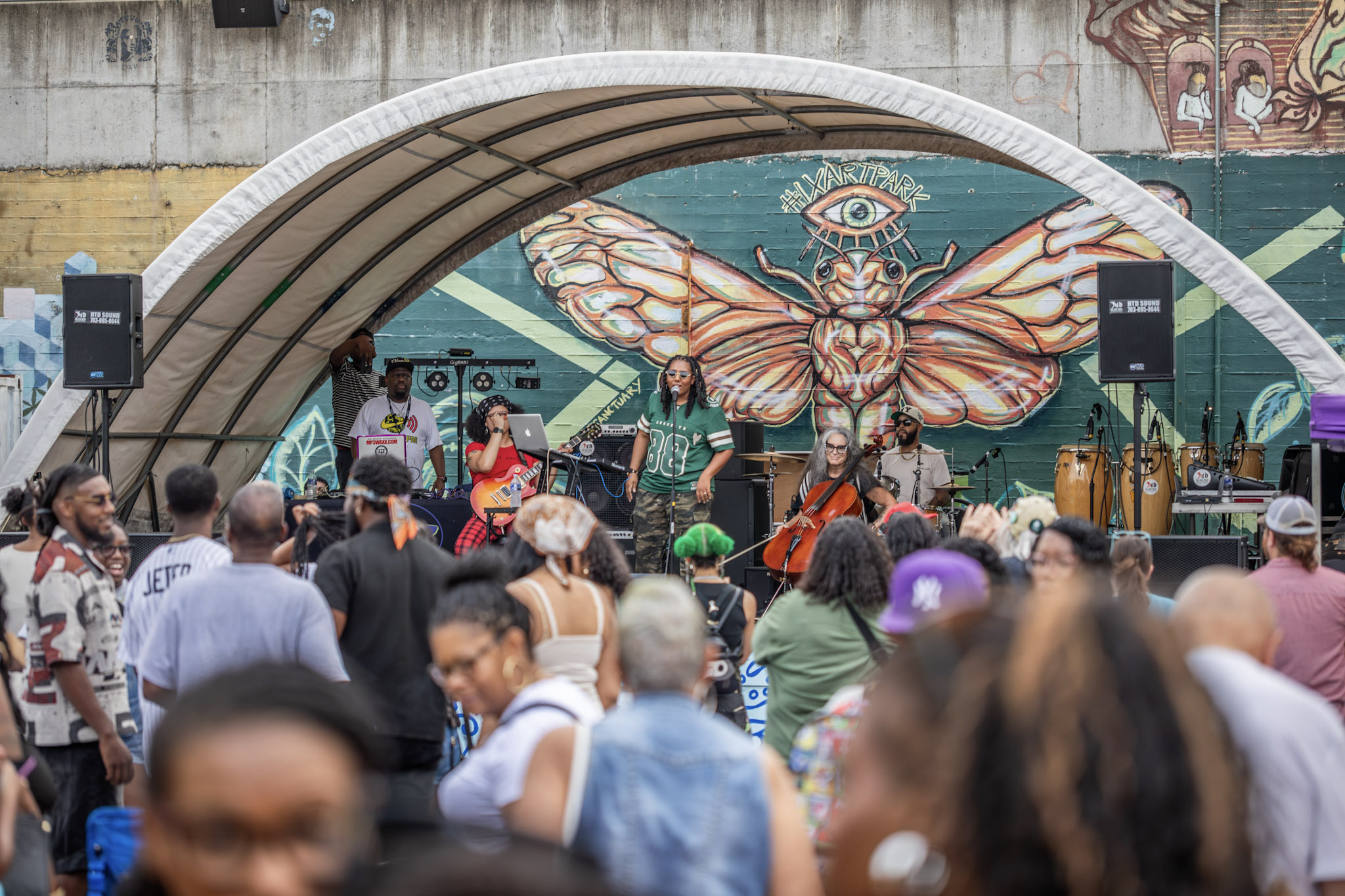
We Are The Ancestors. And Baby, We Were Outside. by Khalilah Jones Photography Credit: Brian Dunn, Ellie Dunn & Corrine...

Student Loan Live Q&A with Robert: PSLF Trackers, SAVE Forbearance, and Navigating RAP vs. IBR ...