Binah Capital Group Eyes Broker/Dealer Acquisitions
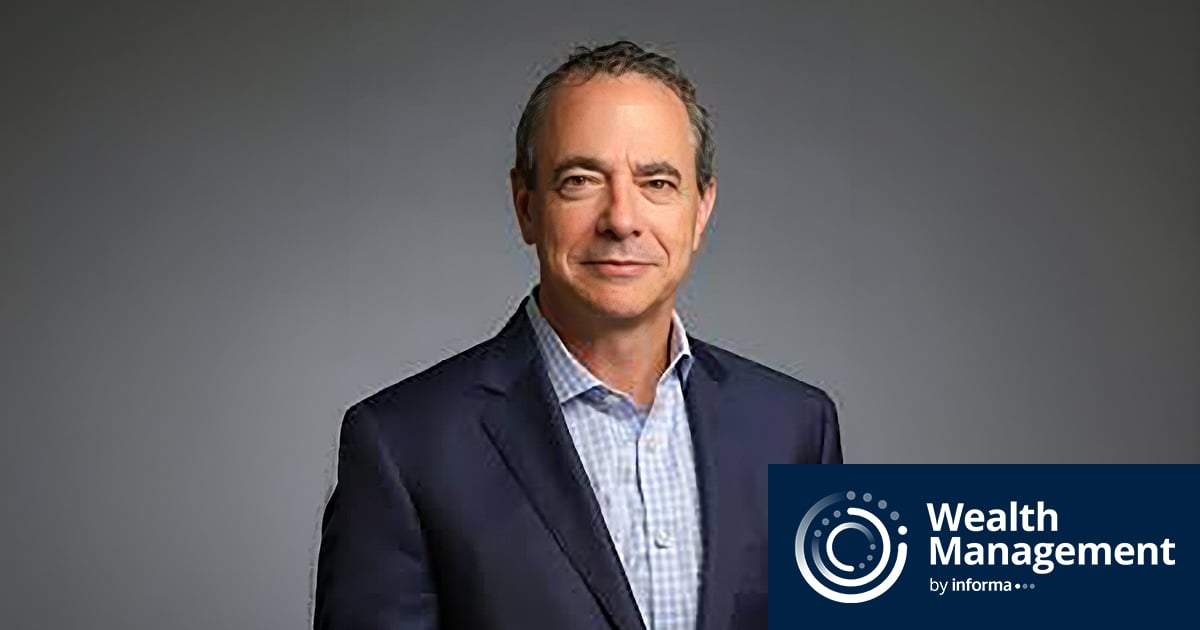

It’s been a little over two years since Binah Capital Group went public via the merger of Kingswood Acquisition Corp., a special purpose acquisition company, and Wentworth Management Services, a broker/dealer aggregator.
Since then, CEO Craig Gould has kept his head down, working on his strategy for leading the firm going forward as well as the firm’s growth and development goals. Now, a lot of those goals are coming to fruition. The firm now has $30 billion of assets under management across its subsidiaries, including broker/dealers Cabot Lodge Securities, World Equity Group, and PKS Investments. The RIA firms affiliated with Binah manage over $400 billion in AUM.
Gould said that going public has allowed the firm to scale in ways it couldn’t before, and it has since added some of the largest RIAs in the industry, including Merit Financial Advisors and OnePoint BFG Wealth Partners.
In a wide-ranging interview, Gould outlined his plans to make minority investments in partner firms, consolidate Binah’s three corporate RIAs and acquire another broker/dealer.
WM: What was your thinking behind going public?
Craig Gould: Today, we deal with close to 600 different RIAs running their commission-based business through us. One of the things that we kept seeing was, as RIAs were looking to go raise capital, private equity was asking pretty simple due diligence questions, which was what due diligence are you doing on the firms you do business with? If 10%, 20% or 30% of their business was commission-based, and they were running it through a friendly RIA, if all of these firms were private for the most part, the only thing that they’re ever seeing is a balance sheet that’s public once a year.
And so I said, “How do I help my partners, who are the RIAs, how do I give them a better answer?” And the idea of being totally transparent to them in real time about what our business was would allow them to answer that diligence question better. And for us to do that, going public was the strategy.
Going public was a transparency story to our RIA partners. And we’ve ended up having some of the largest RIA transitions come over to us since we announced we were going public.
WM: What have you been up to recently, and what’s been your strategy for leading the firm?
CG: We’ve been very focused on strategy; lots of people in the RIA space are familiar with PKS, but we’ve tried to explain the rest of the company and the importance of Binah. Binah now allows me to go to the same strategic partners, these RIAs and offer them a clear and agnostic approach to the business that none of my competitors have been able to do. PKS has a clearing arrangement with Fidelity. Cabot Lodge clears at Raymond James and RBC; World Equity has a clearing relationship with Pershing. If you had a large RIA aggregator that was looking to make an acquisition inside Raymond James, they could do that. They could have reps at PKS and another broker/dealer, but we still have an enterprise-level relationship with that RIA. We’re the only ones that have built out a platform with clearing relationships with all of the major clearing firms.
WM: With that approach, are you seeing any increase in recruiting or advisors interested in joining?
CG: Yes, because we can offer more solutions to them. Where we really see it is with our largest enterprises that are the most aggressive in acquiring. They appreciate our solution more than anybody else because it allows them to transition those assets in the least disruptive way.
WM: I understand that you have been getting traction on the growth and development goals. What are those growth and development goals?
CG: We manage roughly $30 billion of AUM. Our affiliated partners manage over $400 billion of AUM, so we’ve looked at the business and tiered it out between large enterprises and more individual or lifestyle practices.
What we’ve seen in the lifestyle practices is that, now that we end up having scale within our platform, more and more of them are coming to us asking us about best practices, asking us about succession plans, asking us about alternative investments and other products. We are now working on offering products and services to that part of our underlying business. That may be helping make minority investments into their businesses, sourcing growth capital for them, helping them in their succession plans; we’re now taking a more active role. We’re also developing programs to buy their commission-based books of business.
WM: Can you expand on that? What are you offering in terms of minority investments and sourcing growth capital?
CG: Being public always makes it easier for a company like ours to source capital. And again, we’re uniquely positioned where we already have relationships. Sometimes these relationships go back 10, 15, 20 years of us doing business together. For us to strengthen our relationships with the people that we’re already doing business with is a natural extension of our business.
Starting in the beginning of the third quarter, you’ll see a heavy push from us to promote the ability for us to help finance our existing partners’ business wherever they are within the life cycle of their practice. That might be growth capital, it might be deleverage and take some chips off the table, or it might just be an outright succession plan.
WM: Have you done any of these deals yet?
CG: We’ve done a couple of these within the overall platform. We’ve been playing around with it and testing it, and we’re really just about to go significantly launch this within our existing book of business. This is not that I’m actively out campaigning to go make minority stakes in non-affiliated advisory firms. There are lots of others that are doing that and doing that very well.
WM: When Ryan Marcus came on board last year, he said Binah was focusing on making PKS’s corporate RIA a more viable option for advisors. Are you still working on this?
CG: Yes. Each of the broker/dealers serves a purpose and has a unique clearing arrangement. Historically, each of the broker/dealers had its own corporate RIA. We’re now in the process of consolidating our corporate RIAs into a single corporate RIA, and we’re hoping that we will end up having that done probably by the end of the year. That’ll now give it scale to be a viable platform as a solution. And as we look to start making investments, our corporate RIA will be at scale to make those types of acquisitions and end up having the tech stack and everything else we need to be competitive in that space.
Our view was instead of having three separate ones corporate RIAs that were roughly $1 billion or under, combine it, let’s have one corporate RIA at $3 billion where it’s at scale so that it could be a viable solution for someone who wants to give up their own RIA and needs a platform to run their business.
WM: You mentioned earlier that you’re developing programs to buy commission-based books of business. How will that work?
CG: When you look at our platform, and you look at an RIA or someone thinking about creating an RIA, a large part of that commission business is insurance-related or trail-related products. In certain cases, it might not be the growth part of their overall practice, and it might only make up 5% or 10% of their overall practice. But they can’t sell it to another, or they’re afraid to sell it to another financial advisor because that financial advisor is going to want to go post those clients. So, we have created a better solution where we will buy that book of commission-based business from the financial advisor and manage it from the operations side of the business and be able to pay them for that book of business. That allows them to focus on their advisory side, and then in certain cases they might end up dropping their Series 7.
WM: Have a lot of your advisors done that?
CG: Yes, it’s primarily something that they think about in the third or fourth quarter of the year as they renew their registration fees.
WM: Do you have any plans to acquire broker/dealers?
CG: We’re also looking to grow the business inorganically, primarily through M&A. We think that the continued consolidation trend within the broker/dealer space is one to continue, and as a public company, we think that we could end up taking advantage of that and expect to end up having some more news soon about some of the inorganic activities that we’re working on.
When you look at our business today, about two-thirds of our business is tied to the hybrid side of the business. A third of the business is more what you would think of as traditional IBD, where the financial advisors are using us to help them run 100% of their practice. We’re very focused on looking at both the hybrid side and the traditional IBD side.
WM: Are there any other areas you’re focused on?
CG: Yes, one area of focus is on the Delaware Statutory Trusts space; we sell hundreds of millions of dollars of DSTs a year. DSTs last year was about a $5 billion space. It’s projected to be about $11 billion this year, so huge growth.
Too large of a percentage of financial advisors don’t know what a DST is. The largest part of a client’s net worth that a financial advisor has historically not been able to help with is their real estate portfolio. In their annual meetings, they’re hearing about their client’s frustration about being an active manager of a rental property. Now a financial advisor who understands this could end up telling that client, “I can help you through this.” So, we’ve spent a lot of time educating advisors on that process.
I think that there’s a huge opportunity for advisors. Here’s an interesting way to find net new assets within the relationships of their current clients once they understand how to properly position this. We think that it’s a unique opportunity to educate our advisors in the space and be active with them in introducing them to institutional quality DST programs.

Texas public schools lost about 76,000 students in the 2025-26 school year, the first enrollment decline outside the Covid-19 pandemic...

If you’re considering a home equity loan and wondering whether you can deduct the interest on your taxes, the answer...

Articles Single-family rentals (SFR) now house 41% of the U.S. renter population, according to Rentometer Mid-Year...