The Future of Faith May Already Be Here — It Just Doesn’t Look Like Church

by Rabbi Elan Babchuck
A guest blog post published by the Religion & Society Program.
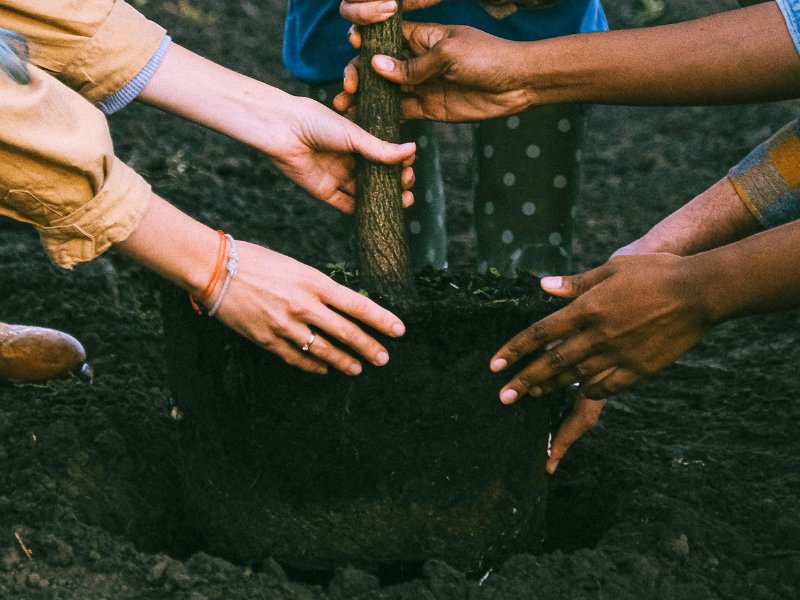
In the woodlands of the Metro DC region, a growing community gathers twice a month to explore what it means to live in deeper relationship with Earth, the Great Mystery, and one another. This diverse group weaves together ancient traditions and contemporary practices, including music, chanting, drumming, silent wandering, movement, and simple ritual.
The community’s practice is not solely inward looking. By listening closely to the land, to spirit, and to each other, participants cultivate a shared sense of responsibility and care for Earth and all beings. What they learn in the woods informs how they show up in their daily lives and how they engage their communities and the wider environment.
Members describe the path as interspiritual, rooted in reverence for Earth as well as wisdom from many traditions. In a moment when many people seek both meaning and purposeful action, this community offers a grounded model of spiritual life that is personal, communal, and engaged with the world around them.
Once considered eccentric, meetings like the Wild Earth Spiritual Community are now a viable alternative to sitting in the pews of your local congregation. According to new research from the Chaplaincy Innovation Lab, Glean Network, and Faith Matters Network, hundreds of spiritually innovative groups have emerged in the United States since 2008. They’re reimagining where and how Americans gather for meaning, connection, and moral action — and they’re doing so mostly outside of traditional congregations.
This trend is unfolding against a shifting backdrop: congregational membership has dropped from 70% in 1999 to 47% in 2020, and weekly attendance has fallen by nearly a third in the past two decades. At the same time, the share of religiously unaffiliated Americans — the “nones” — has nearly doubled, from 16% in 2006 to 29% today. In a country facing what the former Surgeon General calls a “loneliness epidemic,” the question of where people find belonging and purpose has never been more urgent.
The Chaplaincy Innovation Lab’s and Glean’s national study has mapped 71 of these groups in depth, from Jewish to Muslim, Buddhist to Unitarian Universalist, interfaith to unaffiliated. Some operate as nonprofits, some as commercial enterprises, and others as informal networks. Many are led by people with graduate-level theological training; others by lay leaders rooted in their tradition or inspired to invent something entirely new. Despite their diversity, they share a conviction that community, ritual, and moral imagination still matter — even if they’re not housed in a sanctuary.
The Compassion Consortium, for example, hosts weekly online services for people whose love of animals shapes their spiritual life. By blending sermons, meditation, and ethical vegetarian advocacy, it provides attendees with what many call the “missing piece” of their religious experience. In contrast, Base brings rabbis into apartment living rooms across major U.S. cities, where young Jewish adults gather for holiday meals, service projects, and pastoral conversations — offering a home-based network instead of a synagogue. Meanwhile, Nourish UU reimagines the ancient practice of shared meals through “dinner church” gatherings, meeting in homes, community halls, and even over Zoom to cultivate connection and reflection. Sacred Roots takes a different approach, integrating traditional medicines, herbalism, and Indigenous healing practices into workshops that address trauma in community, grounded in the belief that “historical harm happens in relationship — healing has to happen in relationship too.”
These groups are not replacing traditional faith communities so much as expanding the ecosystem. Our research found five distinct “genealogies” of leaders: faith-based organizers, community organizers, spiritual practitioners, educators, and entrepreneurs. Some are building new delivery systems for ancient wisdom; others are translating spiritual traditions into fresh contexts. Many operate in what scholars call liminal spaces, the in-between zones where tradition and experimentation meet, and where institutional categories don’t yet exist.
The implications are profound. If spiritual life is increasingly lived beyond the sanctuary, then the infrastructure of American religion, from seminaries to philanthropies, will need to adapt. Funding and business models often still assume a congregation at the center supported by donations, not a subscription model; training programs still prepare leaders for pulpits rather than podcasts, forest circles, or hybrid community hubs.
We are living through a transformation not of belief, but of form. People still crave meaning, moral purpose, and community; they’re just finding it in gardens, kitchens, Zoom rooms, and city parks. The question is: Will our religious imagination catch up?
The next chapter of American spiritual life is already being written. You can hear it in a chant under the redwoods, in the clink of plates at dinner church, in the shared silence of an online meditation. If we want a future where spiritual community thrives, we’ll have to look for it (and help build it) in places we’ve never looked before.
The post The Future of Faith May Already Be Here — It Just Doesn’t Look Like Church appeared first on Aspen Institute.

About three out of every four Americans have rewards credit cards. They like the perks that come with these cards,...
Author Rod Khleif: Top Multifamily Real Estate Mentor, Best Selling Author & Host of Top Real Estate Investing Podcast I...
Blog Posts Archives UnfavoriteFavorite August 28, 2026 Weave: The Social Fabric Project Subscribe to Weave’s Newsletter This story was originally...