Where To Learn To Trade
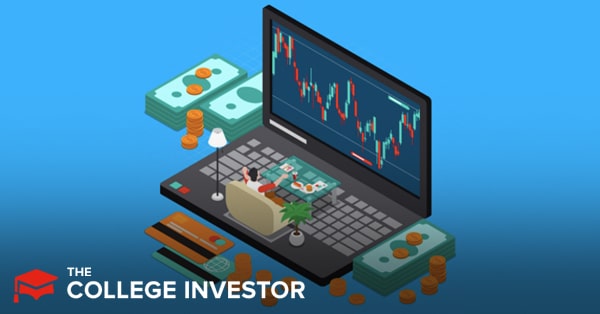
Paper trading in practice accounts (also called “simulated” or “virtual” accounts) allows you to trade stocks, options, and futures with virtual money. This serves several purposes.
The first benefit of paper trading is that it lets you get familiar with the broker’s trading platform before having to commit real money. Not all trading platforms are created equal. You’ll want to make sure that you’re satisfied with the mechanics of executing orders before you commit to a particular broker.
Another reason paper trading is offered is to give traders an opportunity to practice. Maybe you’re completely new to trading and want to develop a profitable strategy. Or maybe you’ve been trading stocks and now want to try options or futures.
Whatever the reason, paper trading in practice accounts gives you the ability to enter and exit trades without risking real money. Keep reading to learn more about its benefits and limitations and to see where you can open a practice account today.
After signing up with an online broker, you’ll receive some fake money in your trading account. This is often $100,000, but could go up to $1 million. As you win or lose trades, you’ll see the account’s P/L (profit/loss) fluctuate, along with the total value of the account.
The simulated experience is very similar to real trading. The main idea is to simulate the real trading environment as much as possible. But, as we’ll discuss later, a simulated environment is still not quite the same as the real thing.
When put in an order for a trade, it must go to an exchange, where it is matched with another trader and executed. For example, if you’re buying a stock, you need to be matched with a seller of the same stock. If you’re selling stock, you’ll get matched with a buyer. The process of moving your order from your machine to the exchange is called “routing.”
Of course, when you’re paper trading, nothing leaves the broker. There is no real order to route to an exchange. But with real trading, things can happen when routing your order. A critical machine might go down, preventing your order from reaching its destination. Lots of other orders might be in front of you, preventing your order from getting a good fill or any fill. This is especially true for paper trading options.
Routing issues that affect your trading are, admittedly, rare but not completely absent So while you might do very well with simulated trading, that might not be the case with real trading due to events that are outside of your control.
You might be surprised at how well you do when paper trading. Once you begin trading real money, however, things may change. When a trade goes against you even slightly, you’re immediately aware that real money is fleeing your account. And this can make it more difficult to keep emotion out of your trade decisions.
The speed at which you can lose big money on a trade greatly depends on the instrument that you’re trading. If you’re trading futures, which are highly leveraged, small movements in the price mean big changes in your P/L. Options trading is very similar.
For those types of instruments, try starting small once you decide to move from paper trading to live trading. For example, the S&P 500 emini has a micro emini. Instead of a $25 tick, it’s only $12.50. That’s half the price for each tick move. Fractional shares serve the same purpose for stocks.
As mentioned earlier, nearly all brokers offer paper trading. The features sets are similar as well. Here’s what to expect from a few different brokers:
The Plynk® App is an app designed to simplify investing and help you grow your knowledge. This app is straightforward and easy to understand, and includes charts, tips, and how-to’s.
With Plynk®, you can start investing for as little as $1. You can invest in a selection of stocks, ETFs, mutual funds and crypto all in one app. Invest any amount you want—whether that’s $1, $10 or $100+.
There are no commissions on stock and ETF trades. For each crypto trade $100 or under, there is a minimum fee of $0.50. For each crypto trade above $100, there is a 0.5% fee. See the full fee schedule here.
Read our full Plynk® App review here.
TradeStation is another desktop platform with a great feature set, including advanced orders. It makes it easy to trade an impressive array of asset types, including stocks, bonds, futures, future options, cryptocurrency, and even IPOs.
All account holders, including those with simulated trading accounts, get access to a large historical market databases to help you back-test trading strategies. They charge zero commissions on stocks, options, and futures and provide strong tech support as well.
Interactive Brokers (IB) is advanced trading platform that is available worldwide. You can trade from their web, desktop, and mobile app. All of their practice accounts start with paper trading equity of at least $10,000
IB traders also get access to their proprietary IB SmartRouting system, which they say provides a share price improvement of $0.47 per 100 shares vs. the rest of the industry. Just be aware that some customer reviews indicate that IB falls short when it comes to tech support.
Take a free trial of IBKR GlobalTrader and gain instant access to $10,000 in simulated cash to trade in a simulated trading environment.
The web-based Power E*TRADE app is the platform of choice at E*TRADE. It allows for entering and exiting positions much faster than using the E*TRADE website. You can trade from their excellent mobile app too and great tech support is included. All paper trading account starts off with $100,000 in trading equity.
Tornado is a great platform that allows you to learn how to trade with a paper trading account (and then a real account as well). Nvstr both allows you to paper trade, follow other investors, and optimize your existing portfolio.
The Charles Schwab ToS desktop platform probably has the richest trading feature set of any broker, including advanced orders. It has just about every charting and scanning tools that a trader could possibly want.
At first, it can be overwhelming. But getting to know this platform has its benefits. Your paper trading account starts off at $100,000. A mobile version of thinkorswim® is also available and excellent tech support is available.
Note: Charles Schwab acquired TD Ameritrade and migrated the Thinkorswim platform to Schwab.
Paper trading with practice accounts has many benefits for beginners and seasoned vets. Beginners get to learn the basics of entering orders, managing positions, and exiting positions. And experienced traders can work on a new trading strategy without the worry of losing any money.
For vets, moving to a new broker with a different trading platform can present risks. But with paper trading, traders can try the platform in simulation mode first. And once they’re familiar and happy with the platform, it’s time to go live!
Here are some common questions we see about paper trading and simulated stock market accounts:
What Is Paper Trading?
Paper trading is simulated trading or practice trading. It allows you to buy or sell stocks, options, ETFs, and more, without using actual cash. It’s typically used to practice investing strategies before deploying them with real money.
How Long Should I Be Practicing Paper Trading?
It depends on how long it takes you to get comfortable with both your strategy and the platform you’re using.
Can I Make Money Paper Trading?
In most cases, no. Paper trading means using simulated money to make trades. However, paper trading may be used for investing competitions, in which case there can be money made if there is a prize.
What Is The Best Paper Trading Site?
This all depends on your goals. We think the best paper trading site is the one that you’re going to use when you start investing real money, since you’ll be used to the experience.
Plynk
Access to the Plynk app is free. Transactional fees may apply. Fees apply to individual crypto trades.
Keep in mind that investing involves risk. The value of your investment will fluctuate over time, and you may gain or lose money.
Past performance is no guarantee of future results.
Cryptocurrencies are volatile and highly speculative, may be subject to market manipulation and liquidity constraints, and you may lose the full value of your investment. You should carefully consider your financial circumstances and risk tolerance before trading crypto. None of the legal protections associated with your brokerage account at DBS (such as the protections under the Securities Investor Protection Corporation [SIPC]) apply to your crypto assets. Crypto assets are also not insured by the Federal Deposit Insurance Corporation (FDIC).
For a full discussion of the risks involved when trading crypto, please see Risks of Trading Cryptocurrency.
The information herein is not intended to serve as a basis for any investment decision or recommendation. Digital Brokerage Services LLC does not provide financial or investment advice, and you should conduct your own due diligence and analysis based on your specific needs.
The Plynk® app provides access to different types of accounts and related services. Brokerage services are provided by Digital Brokerage Services LLC (DBS), member FINRA, SIPC, 499 Washington Boulevard, Jersey City, NJ 07310. Brokerage custody and clearing services are provided by Green Pier Fintech LLC, both members FINRA and SIPC. Crypto services are provided only by Paxos Trust Company (Paxos), a New York State-Chartered limited liability trust company (NMLS #1766787).
The Simulated Trading tool is for informational purposes only. Please note that past performance in the simulation does not indicate future results in actual trading. Investing involves risk, including risk of loss.
Commission-free applies to U.S. equity trades and funds for Digital Brokerage Services LLC (DBS) retail clients. Expenses charged by investments, interest charges, or other expenses for transactions still apply. See brokerage fee schedule for details. Separate expenses for crypto apply. See crypto fee schedule for details.
Plynk marks are the property of FMR LLC; third-party marks are the property of their respective owners.
© 2026 FMR LLC. All rights reserved
This is for persons in the US only.
Paper trading in practice accounts (also called “simulated” or “virtual” accounts) allows you to trade stocks, options, and futures with...

There was a point in my life when I decided that I really wanted to get serious about my finances....
It’s been impossible to escape the push to “democratize” private markets. With average alternatives allocations in the wealth space in...