Wartime Boxing: He Cut His Safety Net, Now 2,000 Kids Are Following

by Marquan E. Jones
The heavy bag swings like a pendulum.
Thud. Thud. Thud.
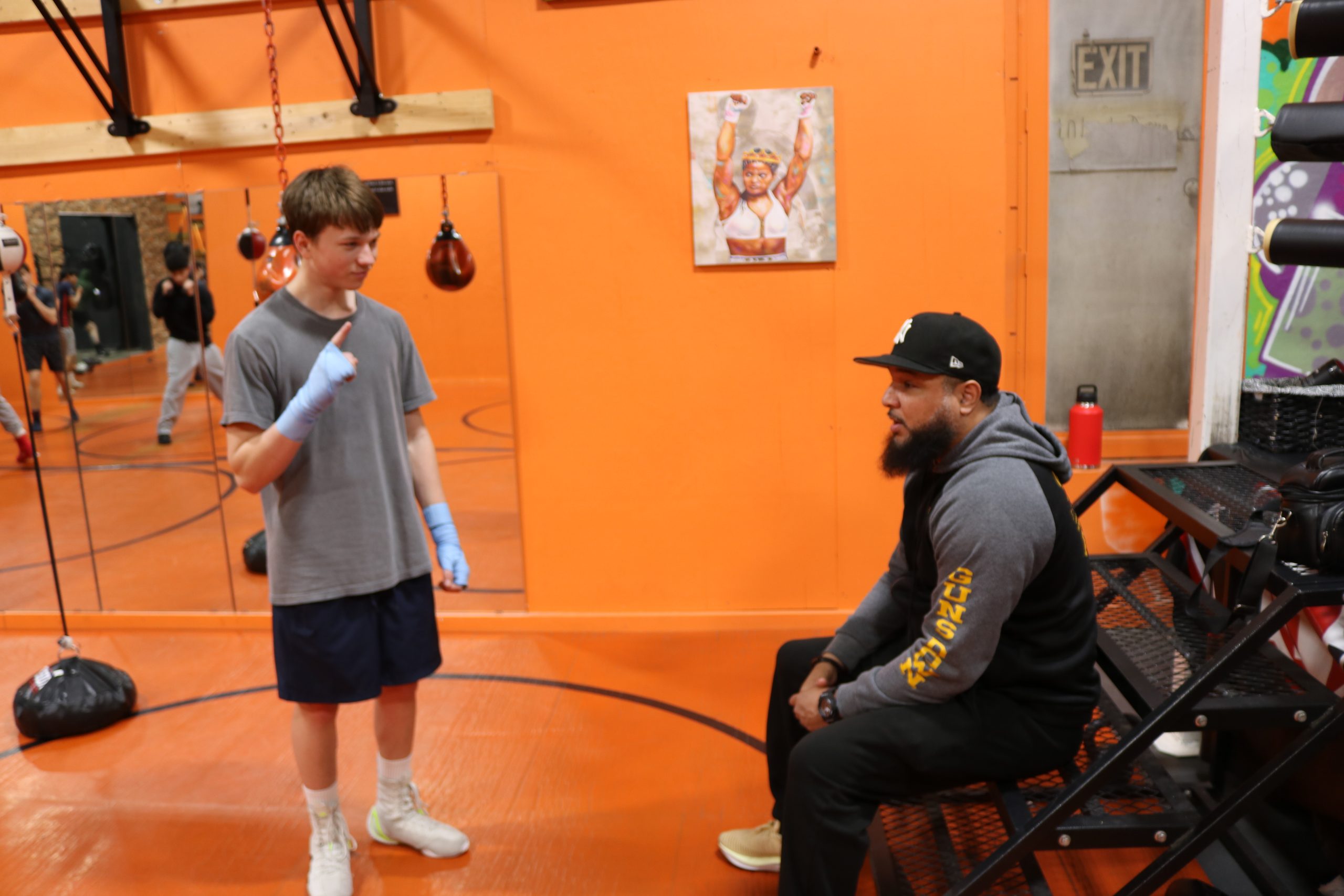
Matrix—lean, focused—plants his feet and fires combinations with the precision of someone who’s done this a thousand times. Around him, the gym breathes. Ropes whip against the floor in steady rhythm. Smaller kids shadow his footwork, trying to match his tempo. A coach’s voice cuts through the air: “Tighten up that jab. Again.”
Light music hums underneath it all, but it’s barely audible over the symphony of work—gloves meeting pads, feet shuffling on concrete, exhales timed to punches. The space itself feels alive. 1226 Harris Street. Wartime Fitness Warriors. A state-of-the-art boxing gym in Charlottesville that looks like it could train Olympians, close enough that you can feel everyone holding each other accountable, spacious enough that no one’s in anyone’s way.
Three years ago, Matrix couldn’t look anyone in the eye.
Now he leads the room.
George Rivera stands near the wall, arms crossed, watching. Forty-seven years old, solid build, the kind of presence that commands respect without demanding it. He doesn’t say much in this moment. He doesn’t have to. Matrix is doing the talking for him.
“I don’t call them troubled youth,” George says later, his voice steady, certain. “I call them misunderstood youth. Because don’t nobody know what they going through, number one. And number two, how can you label that kid or call that kid troubled if you don’t know his lifestyle, you don’t know what he’s seen?”
George knows labels. He wore them like a second skin growing up in Harlem. Violence on every corner. Survival the only curriculum that mattered. When he moved to Virginia, the labels followed him. “New York street baller.” Enough to keep him off teams. Enough to make coaches see trouble instead of talent. Enough to make him wonder if anyone would ever look past where he came from.
So he made a promise: No kid would feel that. Not on his watch.
For years, George Rivera had options. Professional boxing. A future in the ring. One foot in, chasing titles and paychecks. One foot out—coaching, family, life, hanging with friends, staying comfortable. Safe.
Then 2018 came.
His sister got sick. Before she died, George gave her his word: He’d stop playing it safe. He’d go all in.
“When I gave her my word and then she passed away, I cut that safety net out and I put both feet in,” George says. “Into the youth, the community, coaching. Ten toes down on helping the community be better.”
Two years later, in 2020, Wartime Fitness Warriors opened its doors.
The gym doesn’t just teach kids how to fight. It teaches them how to stand. How to show up. How to believe they’re worth showing up for.
Matrix proves it every time he steps on the floor.
Last Saturday, ten kids from Wartime Fitness traveled to Lucks Boxing Gym in Danville. Seven of them competed in heavy sparring. One earned a stoppage in the second round. Not bad for a program that’s only been open four years. Not bad for kids people used to call troubled.
George calls them misunderstood.
Mathew Johnson—everyone calls him Mighty Matt—calls them accountable.
“We hit the streets and make sure them boys not out here running around doing nothing they ain’t supposed to,” Matt says. He’s George’s right hand, the enforcer with a heart, the one who shows up in neighborhoods late at night just to make sure kids are where they’re supposed to be. “We seen the same young boys outside late at night on a school night, missing school, the bus, doing everything else. But once they started coming to the gym and I rode through that neighborhood, them boys were nowhere to be found.”
He and George don’t just pull up to the gym. They pull up to schools. They check grades. They talk to parents. They hold everyone—kids and adults—to the same standard.
“We hold the kids accountable,” they both say, “but we also hold the parents accountable too.”
Inside the gym, there are no second chances.
There are third, fourth, and fifth chances. As many as it takes.
George built Wartime Fitness Warriors on a 10-step program—modeled after boxing’s own progression from novice to world champion. Each step demands something. Discipline. Consistency. Accountability. Mental toughness. It’s not about how hard you can hit. It’s about how many times you’re willing to get back up.
“You do these little small steps,” George says, “life is gonna get a lot easier.”
The kids don’t all come from the same place. Some are court-mandated. Some are one bad decision away from ankle monitors—or worse. Some just want to be better. Want to feel strong. Want someone to see them as more than a label, a statistic, a file in a guidance counselor’s office.
Wartime Fitness doesn’t ask where they came from.
It asks where they’re going.
On Tuesday and Thursday afternoons, the gym shifts. Gloves come off. Books come out. Volunteers arrive—tutors who work with students one-on-one, structured and focused. No video games. No distractions. Just kids getting the academic support they need, surrounded by the same people who push them in the ring.
Grades improve. Fast.
Kids who couldn’t sit still in a classroom suddenly stay after school because someone believes they can do the work. Someone who looks like them. Someone who’s been where they are.
George doesn’t sugarcoat it. He never has.
“I don’t want nobody to go through that experience that I went through,” he says, his voice quieter now, weighted with years of carrying it. “Not even given a chance for just being labeled just because where we originally came from.”
Harlem wasn’t kind. Virginia wasn’t much better. George grew up watching violence spill into streets, into homes, into lives that deserved better. He watched kids—misunderstood kids—get written off before they ever had a shot. He was one of them.
When he started boxing, it gave him an outlet. A target that wasn’t another person. A way to channel everything he’d seen, everything he’d survived.
But coaching? Coaching gave him a purpose.
“Boxing is more than just throwing punches,” George says. “It’s more therapeutic than anything.”
It’s in the rhythm. The repetition. The focus required to tune out everything else and just be present. One combination at a time. One round at a time. One day at a time.
That’s what the kids learn here. Not just how to defend themselves physically, but how to defend their futures.
“We’re not creating bullies,” George says, his tone firm, deliberate. “We’re creating leaders. People that know how to defend themselves.”
Leaders like Matrix, who now mentors younger kids the way George mentored him.
Leaders like the young woman who walked into Wartime Fitness three years ago battling substance use, near-fatal experiences, and academic struggles that threatened to swallow her whole. She didn’t believe in herself. Didn’t think she’d graduate. Didn’t think she had a future worth fighting for.
She graduated.
Now she’s launching her own business.
“When we got kids come up in here, it’s no judgment, it’s no label,” George says. “Everybody’s trying to help each other feel better about themselves, about their confidence.”
That’s the difference. That’s what makes Wartime Fitness more than a gym.
It’s a safe haven.
A place where mistakes aren’t the end of the story—they’re the beginning of the lesson. Where kids can be authentic without fear. Where criticism is constructive, not crushing. Where the only label that matters is the one you give yourself.
Since 2020, over 2,000 young people from Charlottesville and surrounding counties have walked through these doors. Some stay for months. Some for years. Some leave and come back when life gets hard again, because they know the door is always open.
George and Mighty Matt don’t just coach in the gym. They coach in the streets.
“We pull up to the schools,” Matt says. His voice carries the same steady conviction as George’s. No wasted words. Just truth. “We hold the kids accountable, but we also hold the parents accountable too.”
It’s a two-way street. Kids can’t succeed if their home lives are chaos. Parents can’t support their kids if they don’t know what’s happening. So George and Matt show up. They check in. They make sure families aren’t just surviving—they’re moving forward together.
Some parents resist at first. Defensive. Uncomfortable with someone else holding them to a standard.
But most of them come around. Because they see the change in their kids. The confidence. The grades. The way their child walks a little taller, speaks a little clearer, dreams a little bigger.
And they realize: this isn’t just about boxing.
It never was.
The gym empties out around 8 PM most nights, but George and Matt are usually the last ones to leave.
They lock up. Check the lights. Make sure everything’s set for the next day. Then they drive.
Not home. Not yet.
Through neighborhoods where streetlights flicker and corners stay crowded too late. Where kids who should be inside doing homework are outside doing anything but. George and Matt don’t lecture. They don’t judge. They pull up, roll down the window, and talk.
“We seen the same young boys outside late at night on a school night, missing school, the bus, doing everything else,” Matt says. “But once they started coming to the gym and I rode through that neighborhood, them boys were nowhere to be found.”
Gone. Not because someone threatened them. Not because police swept the block. But because they had somewhere better to be. Something better to do. Someone who believed they were worth the effort.
That’s the ripple effect George talks about. The one you can’t measure in trophies or test scores alone.
It shows up in court hearings where a judge offers a deal: complete the Wartime Fitness program and we’ll remove the ankle monitor. It shows up in schools where principals call George directly, asking if he can work with a student everyone else has given up on. It shows up in parents who show up to the gym not because they have to, but because they want to see their kid succeed.
Wartime Fitness has partnerships now. With local schools. With the courts. With jails and social services. Kids who might’ve been headed toward lockup are being redirected toward the ring. It’s not a cure-all. George knows that. But it’s a chance. And a chance is all some kids need.
“We don’t have no problem with them here,” George says, talking about the so-called “troubled” kids other programs reject. “You know what I think it is? I think it’s the labeling part, in my opinion.”
Strip away the label, and you see the person. The kid who’s scared. The kid who’s angry. The kid who’s never had someone show up consistently, who’s never been told they matter.
Give that kid a 10-step program. A coach who won’t quit. A community that holds them accountable without tearing them down.
And watch what happens.
Matrix happened. The young woman who graduated and started her business happened. The amateur boxing champions happened. The kids who stopped missing school happened. The families who started healing happened.
Over 2,000 stories. Each one different. Each one proof that labels lie.
But George isn’t satisfied. Not yet.
“Gloves Up, Guns Down.”
That’s the name of one of Wartime Fitness’s biggest community events. It’s exactly what it sounds like. A massive gathering—youth, adults, families, people from every corner of Charlottesville—coming together to box, to work out, to defuse tension before it becomes violence.
And it works.
After the events, local violence drops. Conflicts that might’ve escalated in the streets get settled in the ring. Strangers become sparring partners. Sparring partners become friends.
“That’s why I feel we’re going to change the narrative,” George says, leaning forward now, voice rising with conviction. “That’s why this is a movement. And it’s going to impact not just our area, but it’s going to impact the whole world.”
It’s not arrogance. It’s certainty.
Because George has seen what happens when you stop labeling kids and start listening. When you stop playing it safe and cut the safety net. When you go all in, both feet, ten toes down.
You build something that outlasts you.
Wartime Fitness isn’t just about the kids in the gym right now. It’s about the ones who’ll come after them. The ones Matrix will coach. The ones that young woman will inspire. The ones who’ll hear about a gym in Charlottesville that refused to give up on people everyone else had written off.
“Once we get all the resources, donations and everything,” George says, eyes bright with the kind of hope that’s earned, not given, “y’all haven’t seen nothing yet. Nothing.”
The vision is bigger than one gym. It’s a model. A blueprint for how youth development should work. Not just athletic training, but mental health support. Academic tutoring. Parent engagement. Life skills. Leadership development.
George and Matt want other gyms, other programs, other communities to adopt the same philosophy. Stop creating athletes and start creating leaders. Stop focusing on wins and start focusing on lives.
“We’re not creating bullies,” George says again, because it bears repeating. “We’re creating leaders. People that know how to defend themselves.”
Defend themselves from violence, yes. But also from the labels. From the low expectations. From the systems designed to keep them exactly where they are.
The next big event is April 4th. Charlottesville High School. 6 to 9 PM. Boxing matches. Community celebration. A chance for the city to see what these kids have become.
George wants the stands packed. He wants parents there. Teachers. Neighbors. City officials. Anyone who’s ever doubted what’s possible when you believe in people instead of labels.
“Come see what we’re building,” he says. Not a request. An invitation.
Because Wartime Fitness isn’t George’s gym. It’s the community’s. It belongs to every kid who walked in scared and walked out strong. Every parent who showed up even when it was hard. Every volunteer tutor who stayed late on a Thursday. Every person who decided that Charlottesville’s youth deserved better than what they were getting.
And it’s working.
The proof is in Matrix’s footwork. In the young woman’s business plan. In the empty street corners Matt drives past. In the 2,000 lives that have already changed, and the thousands more waiting for their turn.
George Rivera cut his safety net in 2018.
He went all in.
And now, 2,000 kids are following.
Not because he told them to. But because he showed them how.
The heavy bag is still swinging when the lights go down.
Thud. Thud. Thud.
Even in the silence, you can feel the echoes. The work that happened here today. The work that’ll happen tomorrow. The work that never really stops because the need never really stops.
George Rivera didn’t cut his safety net because it was easy. He did it because 2,000 kids were waiting for someone to believe in them first. To see past the labels. To show up when everyone else walked away.
Now he’s asking the same from Charlottesville.
Show up.
Not just on April 4th at Charlottesville High School, though that matters. Not just when the cameras are rolling or the headlines are written. But in the quiet, consistent ways that change lives. Volunteer on a Tuesday afternoon and help a kid with math homework. Donate so a family that can’t afford the fees doesn’t have to choose between groceries and giving their child a chance. Attend an event and cheer for a kid who’s never had anyone in the stands before.
“Once we get all the resources, donations and everything,” George says, “y’all haven’t seen nothing yet.”
He means it.
This isn’t charity. It’s investment. In futures that haven’t been written yet. In leaders who haven’t stepped into their power yet. In a community that’s choosing to be better, together.
Wartime Fitness Warriors is more than a gym. It’s proof that labels don’t have to be permanent. That troubled can become misunderstood, and misunderstood can become unstoppable.
But it can’t do it alone.
Visit wartimefitnesswarriors.org. Read the stories. Watch the transformations. See what happens when a community decides that no kid gets left behind, no matter where they came from or what they’ve been called.
Then ask yourself: What would happen if I cut my safety net too?
Matrix already knows the answer.
So does George.
Now it’s your turn.
In my journey toward financial independence, I’ve found one habit to be more important than all the others. This is...

Discover how education and workforce development sectors are crucial in preparing individuals for fulfilling careers. Stay informed about the nation’s...

Over 40% of Americans would likely be denied private student loans from traditional lenders based on credit and income underwriting...