House Subcommittee Considers Bill to Fold FINRA Into SEC
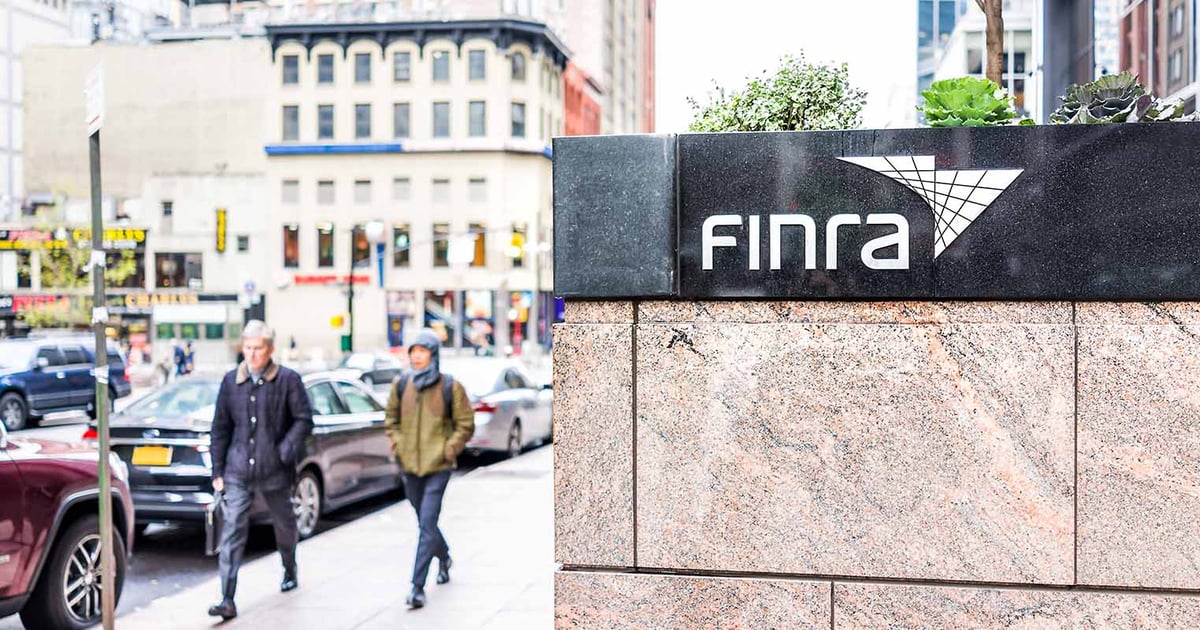

The House Subcommittee on Capital Markets of the Committee on Financial Services held a hearing on Thursday to discuss the role of self-regulatory organizations in U.S. markets, including the Financial Industry Regulatory Authority and the Municipal Securities Rulemaking Board. Lawyers and other industry stakeholders testified at the hearing, with some calling for significant changes at FINRA and increased oversight by the Securities and Exchange Commission.
The hearing comes as the House Committee on Financial Services considers the Restoring Accountability in Market Supervision Act, introduced by U.S. Rep. Lisa McClain (R-Mich.) last April. The bill would transfer rulemaking, examination and enforcement authority from FINRA to the SEC.
Jennifer Shaw, executive director of the Public Investors Advocate Bar Association, testified, arguing for an urgent need for improvements at FINRA. She called out the regulator’s FINRA Forward initiative, its rule modernization initiative, “which PIABA believes moves investor protection backwards to a time long before the 2008 financial crisis.”
“From PIABA’s perspective, not only does it appear that FINRA is weakening the protection for investors on the front end, it is now attempting to stack the deck against investors and retirees who attempt to hold their brokers accountable for their bad or fraudulent advice,” she said. “When investors sign up for investor retirement savings with a financial advisor, they’re forced into FINRA’s industry-run private justice system. Since the financial crisis, FINRA has taken some small steps to make this industry-run forum more fair for investors who have been defrauded. However, with its recent action, just Monday of this week, FINRA announced its intention to consider a rollback of investor protections to the 1980s to a time before the financial crisis, the dotcom bust, or even Black Monday.”
This week, FINRA put out a regulatory notice, seeking comment on modernizing its arbitration rules and processes. Shaw argued that modernization would make it easier for FINRA to dismiss arbitration cases before hearings and change who decides them.
PIABA did not go as far as calling for FINRA to be folded into the SEC, although the topic was brought up during the hearing.
U.S. Rep. Brad Sherman (D-Calif.) said he was agnostic on whether the SRO should be folded into the SEC, but suggested that if FINRA remains independent, the board members could be selected by the SEC.
“That’s the only way that we will get fairness within FINRA,” Shaw said in response. “It has been shown that even its public members are not truly public. They have an interest in the industry, and I think that this should be something that’s considered by this committee.”
Sherman also said that if the SEC swallows FINRA or MSRB, it should also take in the revenue sources of those organizations.
“Is there anybody here who thinks that the amount of money that we spend carrying out the functions of these two organizations is excessive and that we could do it with less staff? Raise your hand if we should cut the staff doing the jobs of FINRA. No hands went up, and my time’s up,” he said.
Rep. McClain, who introduced the bill for discussion, also brought up the issue, arguing that FINRA has grown far beyond its original role.
“Today, FINRA staff, not industry members, writes binding rules, investigates people, brings enforcement cases, holds hearings, issues large fines and can permanently end someone’s career,” she said. “Yet, FINRA is not subject to the same transparency laws as federal agencies. Its meetings are not fully open. Its records are not fully public.
“Now, if an organization exercises government-level power, it should have government-level accountability. So, it’s time to ask whether those powers should sit directly under the SEC, where oversight, transparency and responsibility to the American people are clear.”
She also noted that FINRA CEO Robert Cook earned $3.6 million last year.
Onnig Dombalagian, a professor of law at Tulane University School of Law, responded, “When we say the FINRA is a quasi-governmental agency, are we saying that they have the power, again, to be able to put people in jail? No.”
McClain shot back, saying FINRA does have the power to collect and levy fines. Dombalagian agreed with her, but argued that it’s only for individuals in the securities industry.
“If it looks like a duck and it acts like a duck and it quacks like a duck, it’s probably a duck,” McClain said.
Another representative asked Dombalagian whether FINRA was more or less accountable to the public than the SEC.
“I would say that FINRA does not take your life, liberty and property,” he responded. “All FINRA does is revoke your license to participate in the securities industry. That can have devastating consequences for people whose livelihood depends on it, but FINRA is not in that sense accountable to the public in the way that the SEC is, which does have those powers and other governmental bodies that do have those powers.”
He added that there is an accountability process in place, including the regulatory notice and comment process and rules for the review of disciplinary decisions.

We all need a certain number of dollars to live a happy and content life. This amount varies from person...
Beacon Pointe Advisors Acquires Two Firms Managing $695 Million Beacon Pointe Advisors, a Newport Beach, Calif.-based registered investment adviser with...

Managing student loans is always a significant challenge, but fixed-rate loans can make your repayment much more predictable. Unlike variable-rate...