Fostering Regional Collaboration: How two Michigan communities on opposite sides of the state are building momentum
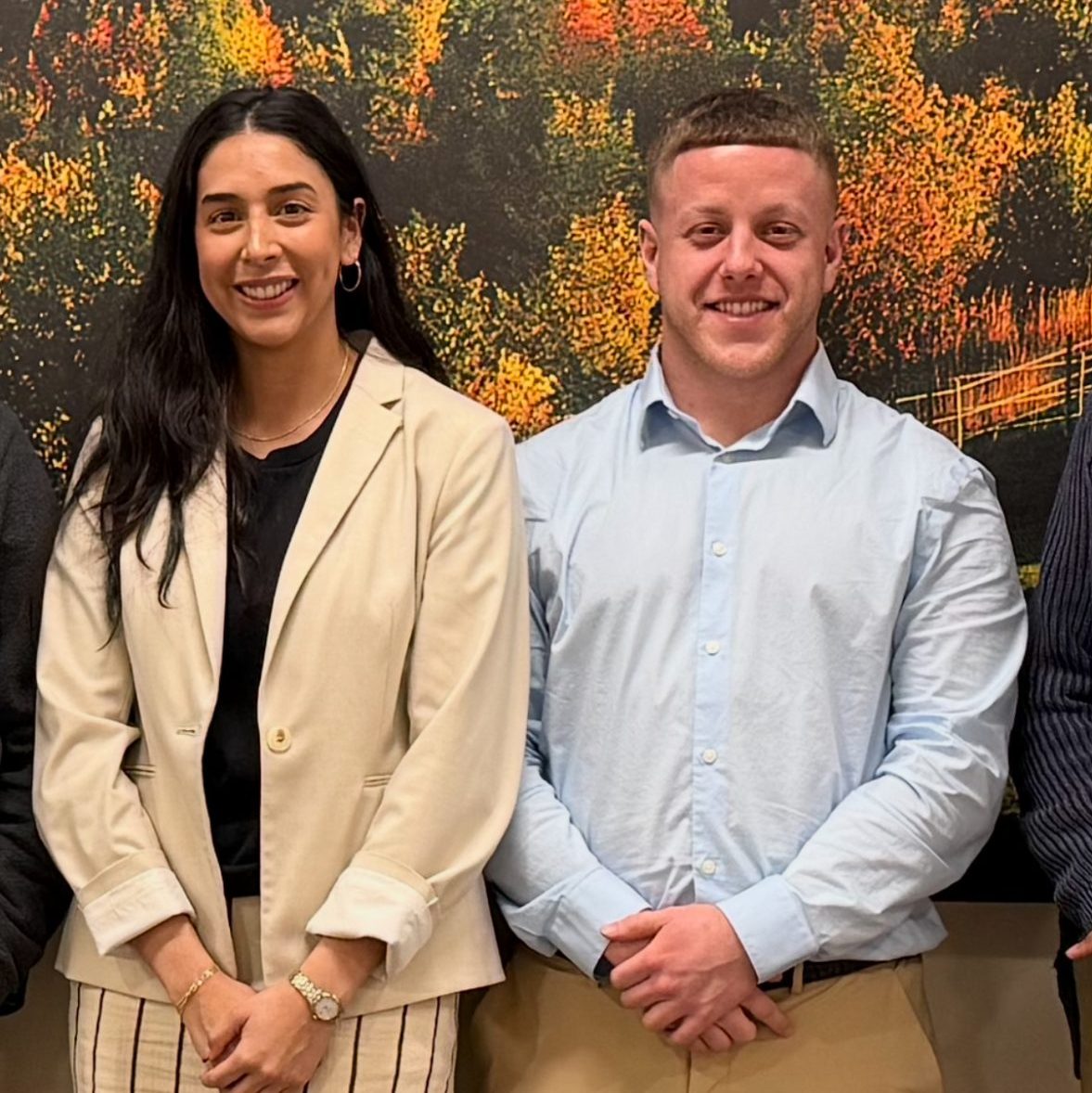

The Community Growth Fellowship, in partnership with the Michigan Department of Labor & Economic Opportunity’s Community & Worker Economic Transition Office, places fellows in communities across the state. Fellows Chris Anderson and Mayra Martinez Peña are placed with host sites on opposite sides of the state. Mayra is placed in Wayne County at Downriver Community Conference (DCC), and Chris is placed in the UP at Lake Superior Community Partnership (LSCP). Both are part of regional coalitions advancing shared priorities around economic development. Although Chris & Mayra are originally from Wisconsin & North Carolina, respectively (they called Michigan home before joining the program). Both are focused on building and bettering Michigan communities in ways that make people want to stay, build, and invest in the places they call home.
They see their respective host sites as being instrumental to this effort. Though in different regions, they see both DCC and LSCP as conveners and connectors—making it easier for communities, organizations, and businesses to see themselves as part of the same regional story and to build a more competitive future by working side by side.
The majority of this blog was written in their words, discussing the similarities and differences of the regions and work they’re doing, and how collaboration is the strategy that will continue building stronger and more resilient communities.
Mayra: When I first got here, as a southerner, I was mostly just trying to survive the weather. There is a very specific point in winter where you stop checking the forecast and start asking, “Is this just my life now?” But once I adjusted, Michigan started to grow on me in a real way. Something about Michiganders screams grit. People here are proud in a “we’ve been through things and kept going” kind of way.
To me, my community is more about the people than any specific club, event, or activity. It’s showing up, running into familiar faces, and slowly realizing your calendar is full because your community is full. I found my community through coed soccer, volleyball, a run club, and a handful of book clubs. That community is what makes this place feel like home.
Chris: My path toward building a Michigan community has been shaped through family life, work, and professional networking. When I first moved to the Upper Peninsula, I wasn’t exactly sold on the winters either. Coming from Wisconsin, I thought I knew cold, but nothing really prepares you for a UP winter. Over time, though, the UP started to grow on me.
Community for me looks like raising a family along Lake Superior, living in a place where I can grow, and seeing the people I run into at work meetings and those I collaborate with are the same folks I bump into at school events, local games, and in line at the coffee shop. Somewhere between building a career, shoveling a lot of snow, and getting to know the people who keep showing up for this region, the UP stopped feeling like a temporary stop and started feeling like home.
We both work in economic development, but neither of us sees our role as limited to “business growth” or “investment attraction.” True growth comes when multiple facets are addressed within a community, and collaboration is the best strategy.
Mayra: In Downriver, collaboration is done through the DCC, a coalition of 20 municipalities in Wayne County focused on moving communities toward regional collaboration rather than isolation or competition. Through the Community Growth Academy, much of our work has focused on the five riverfront communities (River Rouge, Ecorse, Wyandotte, Riverview, and Trenton) and helping them align their economic development strategies, including brownfield redevelopment, small business support, and quality of life/placemaking.
Chris: Work in the UP operates in a different geographic and economic context. Still, it is similarly focused on regional coordination, long-term economic strategy, and building systems that allow communities to be more competitive together than individually. In the UP, collaboration is done through LSCP, a regional organization that brings together public, private, and nonprofit partners to advance shared economic goals. Their role is to move communities away from working in silos and instead toward a coordinated, regional approach that recognizes how closely our economies are connected. Throughout the Community Growth Academy, much of our focus has been on strengthening ties between Marquette and neighboring communities, including Delta County, and aligning around long-term strategies rather than one-off projects.
One of the most interesting things about working in Michigan is how different the state can feel depending on where you are. In the UP, communities are rural, geographically isolated, and deeply shaped by natural resources and Lake Superior. In Southeast Michigan’s Downriver region, the context is almost the opposite—more urban, more industrial, and tightly tied to legacy manufacturing and logistics along the Detroit River and Canadian border.
Both regions are shaped by water, legacy industry, and the need to adapt older economic systems into something more sustainable. And both recognize that no single community can solve complex economic challenges alone. Though they may not have the exact answer, they are both working towards a similar goal: regional collaboration.
Mayra: In Downriver, my work centers on education and workforce development, particularly helping students connect to career pathways in their own communities. From my background and previous experience in education, I believe young people shape what they think is possible for themselves through lived experience. When students are able to be part of real opportunities close to home, career pathways stop being something abstract and become tangible. There’s a big difference between hearing jobs exist and actually visiting workplaces, meeting people, and seeing yourself in those environments. In those moments, students realize, “Oh… I could do that here.”
Engaging youth in the workforce system is especially important Downriver. Many communities are navigating the challenges of an aging workforce and the outmigration of younger residents, who often leave in search of opportunity elsewhere. The question we keep coming back to is: How do we make staying feel like an option—not a fallback? By connecting education, industry, and community in a way that feels real and reachable.
The DCC riverfront communities are aligning their economic development strategies and working more intentionally as a collective. Our North Star goal is to foster recovery, resiliency, sustainability, equity, and environmental justice across our riverfront communities.
Chris: My work in Marquette centers on strengthening regional collaboration and positioning the area within broader economic networks. A big part of that includes exploring opportunities like trade zone development, which can help attract investment and connect the region more effectively to national and international markets.
What stands out to me about this region is how intentional communities are about leveraging what they already have—natural resources, infrastructure, and strong local relationships. There’s a clear understanding that growth doesn’t have to mean changing identity; it can mean building from it, together.
Our North Star goal is to have Marquette and Delta counties physically and culturally connected by 2035. That means more than just infrastructure; it means built relationships, shared identity, and coordinated strategies that make the region stronger as a whole.
Getting people, organizations, and municipalities to move in the same direction isn’t easy. Collaboration takes time. It requires trust between communities that historically may have operated independently. It requires ongoing coordination to keep priorities aligned as conditions change. However, when communities pool resources, align priorities, and build trust, they create economies that are more resilient and more competitive on a larger scale. Whether a cluster of riverfront cities or across multiple rural counties, collaboration is a requirement for long-term success. Even though the approach may differ between our regions, the idea is the same: regional success depends on collective action.
Texas public schools lost about 76,000 students in the 2025-26 school year, the first enrollment decline outside the Covid-19 pandemic...

If you’re considering a home equity loan and wondering whether you can deduct the interest on your taxes, the answer...
Articles Single-family rentals (SFR) now house 41% of the U.S. renter population, according to Rentometer Mid-Year...