Covesville History Day preserves village’s Black history one memory at a time

by Tiana Woodard
COVESVILLE — As Devon Williams cut a path in the grass towards the dilapidated property, the magnitude of the task she took on — restoring her dear great-grandmother Virginia Ann Williams’s country house — sank in.
Uncut grass towered over the space, shrouding the structure that represented the best of Williams’s childhood memories. Litter from squatters dotted the interior and exterior. It would take countless years, dollars, and sweat equity to restore this centuries-old home.
In this moment of uncertainty, Williams said, she was hit with a poignant call to action.
“As I was standing there, the ancestors were like, ‘Don’t worry about the house,’” Williams said. “Just worry about keeping the legacy and memories. Keep that alive.”
This one-on-one moment with her ancestors, Williams said, spawned Covesville History Day. The second annual event, which takes place this year on Saturday, Aug. 22 at the Faber Volunteer Fire Department headquarters, convenes attendees to learn about the rich Black history of this 145-person village nestled between the Blue Ridge Mountains.
Covesville History Day is one offering from The Country House Project, Williams’s nonprofit focused on mobilizing descendants to preserve and protect the spaces their African American ancestors once called home.
This year’s Covesville History Day, themed “Kinnection,” will include history presentations, archiving resources, and a performance from Charlottesville’s 100 Proof Gogo Band. But above all, the daylong function will give Covesvillians of all ages an opportunity to reconnect with their ancestral homelands and walk away with new memories, kinfolks, and community knowledge.
“You have to celebrate this history while you still can,” Williams, founder of The Country House Project, said.
For many African Americans from Covesville, their hometown is only a memory. Something intangible and out-of-reach, stored safely in the receptacles of their mind. Covesville History Day offers a unique solution to a challenge experienced by many African Americans from rural towns. It creates a physical space for memory and connections in a place many of them were forced to leave behind.
“Sometimes, places don’t remain, but the stories must,” said Terésa Dowell-Vest, a Covesville native and author of the 1999 play “Vinegar Hill.” “If we’re not around those who remember those stories best, where their stories thrive, where these stories reside, you will lose them.”
On Wednesday, Aug. 19, the Albemarle County Board of Supervisors will vote on a resolution to recognize the fourth Saturday in August as Covesville History Day, Williams said. If passed, the day would celebrate a unique historical gem located along U.S. Route 29.
“Covesville is such a small area that you can drive through it in less than a minute,” said Lucille Stout Smith, a local historian and decades-long member of the First Baptist Church of Covesville. But those ten square miles, Stout Smith said, pack a ton of interesting history.
Formed in the mid-18th century, Covesville started as a small settlement of Scots-Irish and German immigrants on what had been ancestral Monacan land for millenia. It grew exponentially after the construction of the Orange and Alexandria Railroad expanded into Charlottesville, and a Covesville stop was added in 1864. Its lucrative apple orchards, fueled by the labor of new freedmen and their descendants, put the village on the global map.
For Williams, Covesville is the space that holds idyllic weekend memories. Many times, her family would drive from her native Washington, D.C. to see her great-grandmother Virginia, or as she called her, Virgie. Even in her 90s, you could find Virgie chopping wood, firing up the rustic wood stove, and serving spiced, cooked apples with almost every meal.
“That memory pulsates in me today,” Williams said.
Dowell-Vest, who spent her childhood in the village, proudly says she grew up in a town of 821 people. She cherishes rooting for the Covesville baseball teams during their home games. She remembered when Sam The Beast From The East performed in their town. And she gathered with dozens of Black families for First Baptist’s Family Day.
In her hometown, “your summers were filled with community, baseball, good times, and cousins fighting,” Dowell-Vest said. “My life growing up in Covesville would be the things of a great movie.”
However, the Covesville of their childhoods is long gone. Baseball games are long over, summer apple picking is seldom. Many Black Covesville natives, Dowell-Vest said, were tasked with achieving more than their parents and parents’ parents did. Go to college, get a good job — things that meant moving away.
“We kept our promise, but that promise took us away from Covesville,” Dowell-Vest, who now lives in Houston, said. “This is the juxtaposition of what it means to grow up as a country kid.”
With a fraction of town residents remaining and few historic preservation restrictions in place, Black Covesville’s origin story is at stake.
Andrea Roberts, founder and director of the Out(sider) Preservation Initiative at the University of Virginia, said supporting initiatives such as Covesville History Day is crucial. She said it centers a remarkable enclave in southern Albemarle County which might not receive the same attention or resources as other historic or presidential sites in the region.
Covesville’s Black community “is a worthwhile community worth preserving,” Roberts said. “Covesville History Day is a means to make that happen.”
Last year, the inaugural Covesville History Day drew around 75 attendees and several organizations committed to preserving local Black history. Lucille Stout Smith, the local historian, presented a “pictorial overview” of the village with several images of Covesville residents who made a difference in the community. Williams built a large family tree that drew connections between the village’s small Black enclave.
For Charlottesville resident Sheila Dudley, the inaugural gathering was a reunion. She ran into several old acquaintances, ones she remembered hanging out on the porch or attending school with.
After looking at a family tree at the event, Dudley said, “it turns out they were related to us.”
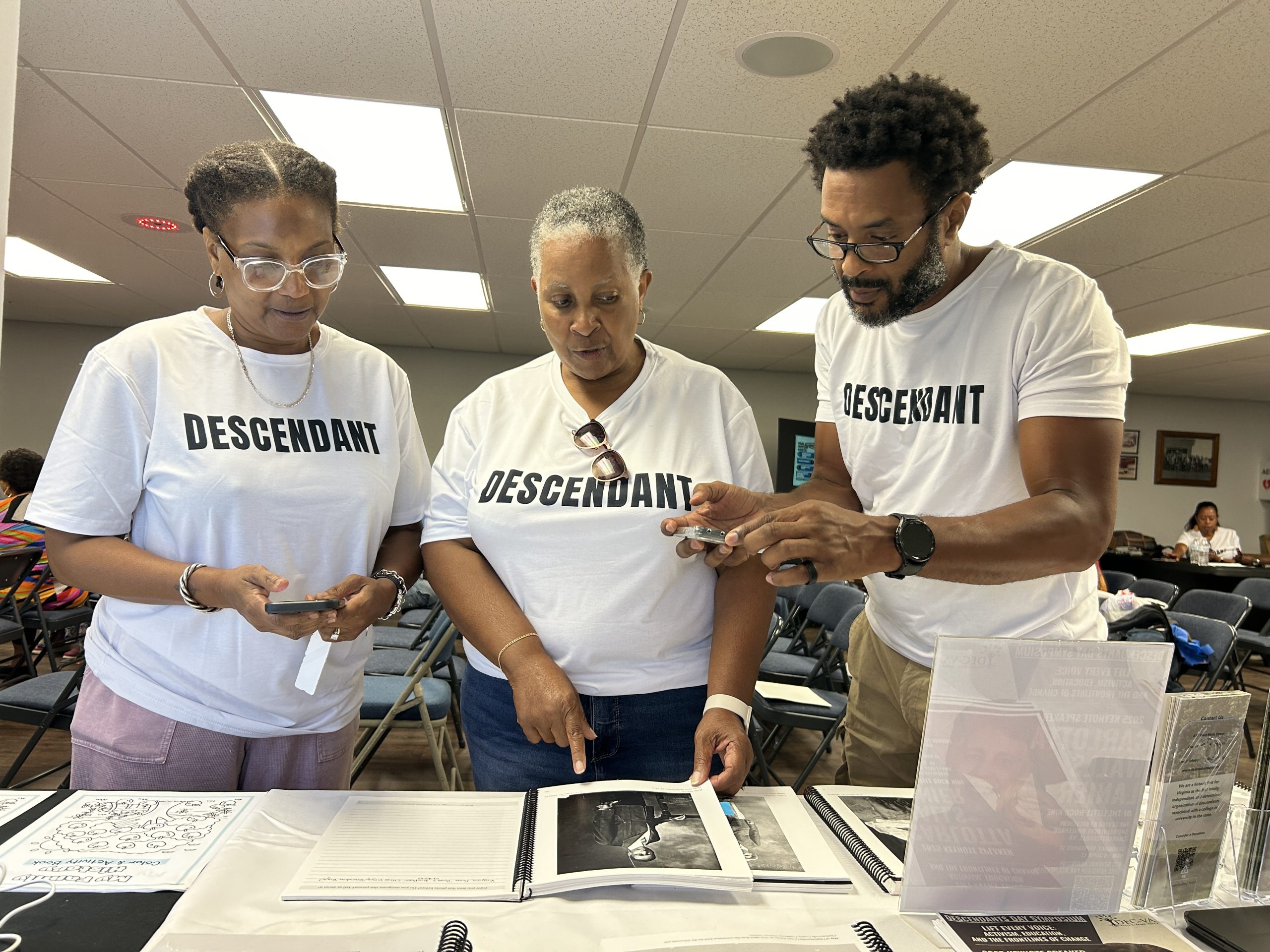
Among the tabling groups was the Descendants of Enslaved Communities at the University of Virginia, or DEC, which preserves the legacies of free and enslaved people connected to the institution.
DEC President Jessica Harris is an Albemarle County native, and grew up with vague knowledge of the village’s apples, baseball, and close-knit nature. As attendees visited the organization’s table and spotted pictures of their ancestors in the coveted Holsinger Studio Collection, Harris said, the reality sank in that Covesville wasn’t this faraway settlement down U.S. Route 29, but instead a piece of a larger Black Albemarle tapestry.
“Events like this remind us that we’re a part of this larger narrative, this larger history,” Harris said. “It’s critical we have these spaces for engagement because that’s how we really ensure these legacies advance.”
Blog Posts Archives UnfavoriteFavorite October 26, 2026 Financial Security Program Kira Tebbe Senior Manager, Benefits Transformation Initiative Tim Shaw Director,...

As more advisors move toward fee-based, planning-driven relationships with clients, a familiar blind spot persists across many books of business:...

Applying for a loan is stressful enough without worrying that a lender may not be treating you fairly. Some lending...