Can’t Pay Your Bills? 10 Steps to Take Before You Fall Further BehindBehind on Bills? Here’s What to Pay First (and 10 Things You Can Do Right Now)
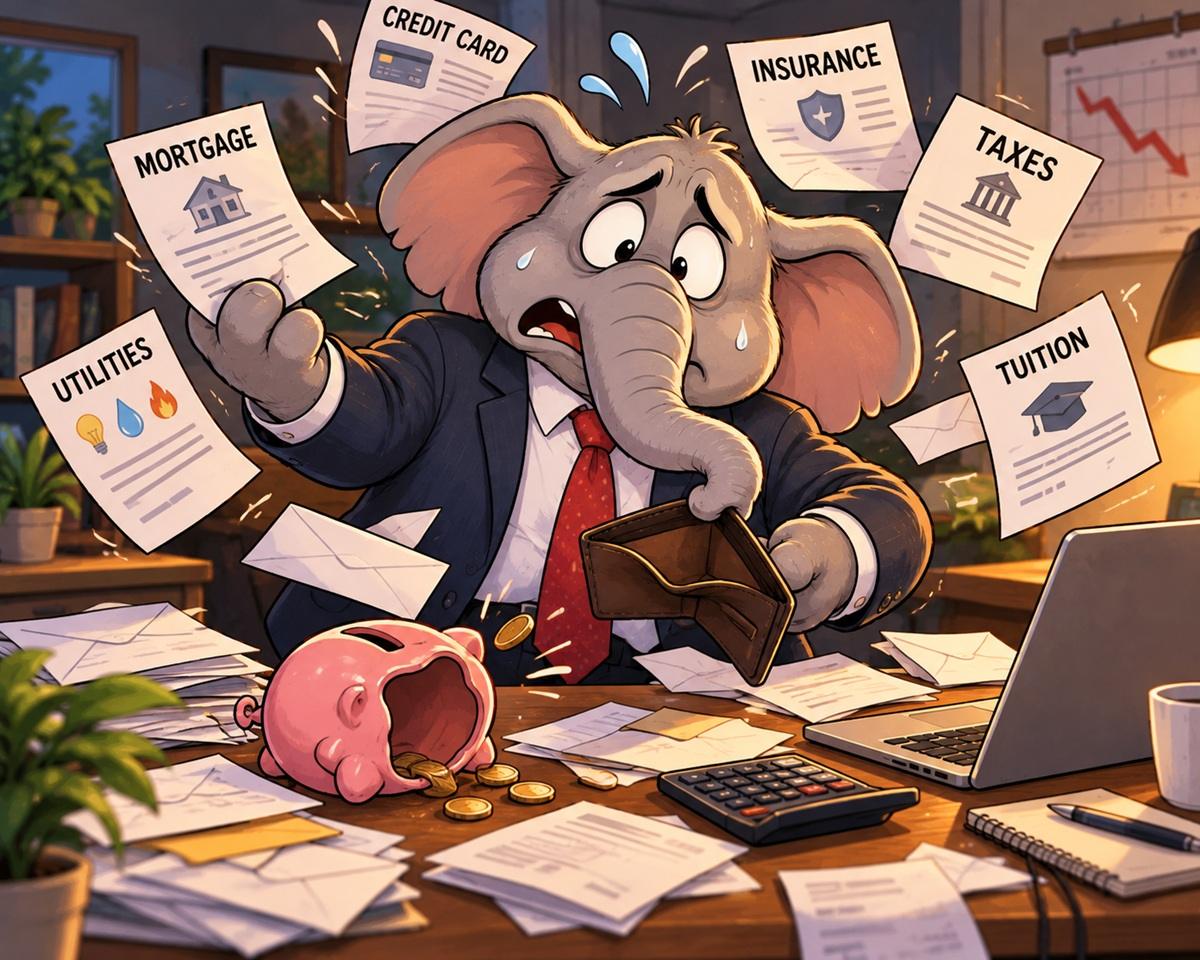

This stat shocked me. Nearly 1 in 5 American families with debt fell behind on a loan payment in the past year.
That stat comes from the Federal Reserve’s 2025 Survey of Consumer Finances, which came out in early October. Of families with debt, 19.6% of them fell behind on at least one payment. This is up from 12.2% back in 2022 and the highest percentage since 2010.
It’s getting worse for those who are really behind. The percentage of families who were at least 60 days late jumped from 4.9% to 8.2%.
If you’re behind, you’re not alone.
And you have more options than it probably feels like right now.
But not all bills are not created equal. Paying a credit card a few days late costs you a fee. Missing rent or ignoring a shutoff notice can cost you your home or your electricity.
And a lot of companies have hardship programs they don’t advertise. You just have to ask.
Here’s what I’d do.
When there isn’t enough money to go around, you can’t treat every bill the same.
Protect the big four: your housing, your ability to work, your health, and your family’s basic needs.
Write down every bill, how much you owe, when it’s due, and what happens if you don’t pay it. Then rank them.
Here’s how I’d think about it:
| Priority | Bills | Why |
|---|---|---|
| Essential | Rent or mortgage | Keeps a roof over your head |
| Essential | Food, medication, necessary childcare | Health and basic needs |
| High | Electricity, heat, water | Avoids shutoffs |
| High | Car payment and insurance (if you need it for work) |
Protects your income |
| High | Child support and court-ordered payments | Real legal consequences |
| Next | Credit card minimums | Avoids fees, credit damage, penalty rates |
| Evaluate | Medical bills, unsecured personal loans | Often have payment plans or hardship options |
| Lower | Subscriptions, streaming, optional services | Cancel or pause |
This isn’t a universal ranking. If losing your car means losing your job, the car payment moves up. A court date or a shutoff notice moves things around too.
The point is to pay based on consequences, not on who calls you the most.
This is one of the most underused moves out there.
You don’t have to be late to ask for help. Most big issuers have hardship programs for people dealing with a job loss, a medical emergency, or a drop in income.
Depending on the issuer, you might get:
Not every issuer offers every option, and they may freeze or close the card while you’re in the program. Still worth the call.
Here’s a script:
“I’m having some financial trouble and I’m worried I won’t be able to make my next payment. I want to keep my account in good standing. Do you have a hardship program or any temporary payment assistance?”
Before you say yes, ask how it affects your rate, your payment schedule, your credit report, and whether you can still use the card.
Get it in writing too.
Missing your due date doesn’t hurt your credit score immediately. Many credit card companies won’t report you unless you miss for a lot longer.
There are milestones:
Every card is a little different, but the lesson is the same. Act early.
If you’re only a few days late, pay as soon as you can. Getting it in before 30 days usually keeps it off your credit report, even if you already ate the late fee.
And if you can only cover the minimum, pay the minimum on time. That keeps the account current. Interest keeps piling up, but you avoid the worse outcomes.
Don’t wait for the shutoff notice.
Most utilities offer payment arrangements, budget billing, or hardship programs, and many can connect you to state assistance. You may be able to spread a past-due balance over several months.
Two places to look:
When you call your utility, ask two questions: Am I eligible for a payment plan or assistance? And does enrolling stop a disconnection?
Housing is the bill to protect above almost everything else.
If you own, call your mortgage servicer and ask about “loss mitigation.” Use that phrase. Depending on your loan, options might include:
Forbearance postpones payments and gives you some breathing room. Ask exactly how you’ll pay the missed amount back, because a lump sum at the end is a very different thing than a few extra dollars a month.
A HUD-approved housing counselor can walk you through your options, usually for free.
If you rent, talk to your landlord before you miss rent. Come with a specific ask – split the rent into two payments, or a one-week extension. It’s better than trying to ask after missing a payment or two.
And get it in writing. And don’t assume a partial payment protects you from eviction. In a lot of places it doesn’t.
If you need your car to get to work, losing it makes everything worse.
Before you miss a payment, call your lender and ask about extensions, deferments, or other hardship options. Many lenders will let you push a payment to the end of the loan.
There’s a cost. Interest usually keeps accruing, so the loan takes longer and costs more overall.
Ask about fees, credit reporting, and your new payoff date before agreeing.
And don’t count on a grace period. Repossession rules depend on your state and your contract, and in some cases a lender can repossess after a single missed payment.
Medical bills are big, confusing, and more negotiable than people think.
Before you pay one you can’t afford, ask for an itemized bill and compare it to your insurer’s explanation of benefits. Look for duplicate charges, mistakes, and things insurance should have covered.
Then ask the hospital or provider about:
Nonprofit hospitals are required by law to have a financial assistance policy. Eligibility varies, but it’s worth asking every time.
Dollar For is a nonprofit that helps people navigate this confusing system and it’s completely free – call them!
Don’t rush to put a big medical bill on a credit card. You could turn a bill that qualifies for assistance or a 0% payment plan into 20%+ APR debt.
Borrowing feels like the fastest fix. Check for help you don’t have to pay back first.
Depending on your income and situation, there are programs for:
Start at USA.gov/benefits or your state’s benefits portal, plus 211.org for local programs.
If your income dropped recently, you may qualify for more than you think.
If you’re juggling multiple credit cards and can’t realistically make the minimums, a nonprofit credit counselor can help.
They’ll go through your finances and help you build a plan. Many offer a debt management plan (DMP), which can lower your interest rates and fees on credit cards and other unsecured debt.
A DMP is not debt settlement. You still repay what you owe, just on better terms and in one organized monthly payment.
There may be a small setup or monthly fee, and the cards in the plan are usually closed.
Start with the National Foundation for Credit Counseling (NFCC) or the Financial Counseling Association of America (FCAA).
Be careful with “debt relief” companies promising to wipe out your debt fast especially if they tell you to stop paying or stop talking to your creditors.
Once you’ve called your creditors and know which bills are urgent, make a short-term plan.
Forget the annual budget for now. You just need to get through the next 30 days.
Start with three numbers:
Then pause anything nonessential, move or shrink or cut whatever bills you can, and lock in arrangements with your creditors.
If the problem is timing, like bills due before payday, ask to move your due dates. Most credit card companies and many utilities will do it.
If the problem is a bigger, ongoing gap, moving due dates won’t fix it. You’ll need longer-term changes, more assistance, or professional help.
When you’re stressed about money, it’s easy to grab the thing that feels like relief today and costs you a lot later.
Watch out for:
Falling behind is overwhelming, especially when everything seems due at once.
But missing a payment doesn’t mean you’re out of options.
The sooner you call, the more options you’ll have. Wait too long and those options start disappearing.
Protect the essentials. Know what happens if each bill goes unpaid. And ask for help before you need it badly.
You won’t fix everything today. You just need to keep a temporary setback from turning into a permanent one.
This stat shocked me. Nearly 1 in 5 American families with debt fell behind on a loan payment in the...

“Coffee is not just a business, it’s also part of our lineage.” – Hrag Kalebjian (left), owner of Henry’s House...
Key Points The Public Service Educational Assistance Act would cover tuition, fees, and books for up to four years at...