Aspen Economic Mobility Fellows Kick Off a Year of “Good Trouble”

The Aspen Institute Business & Society Program Launches Its Fourth Economic Mobility Fellowship Class
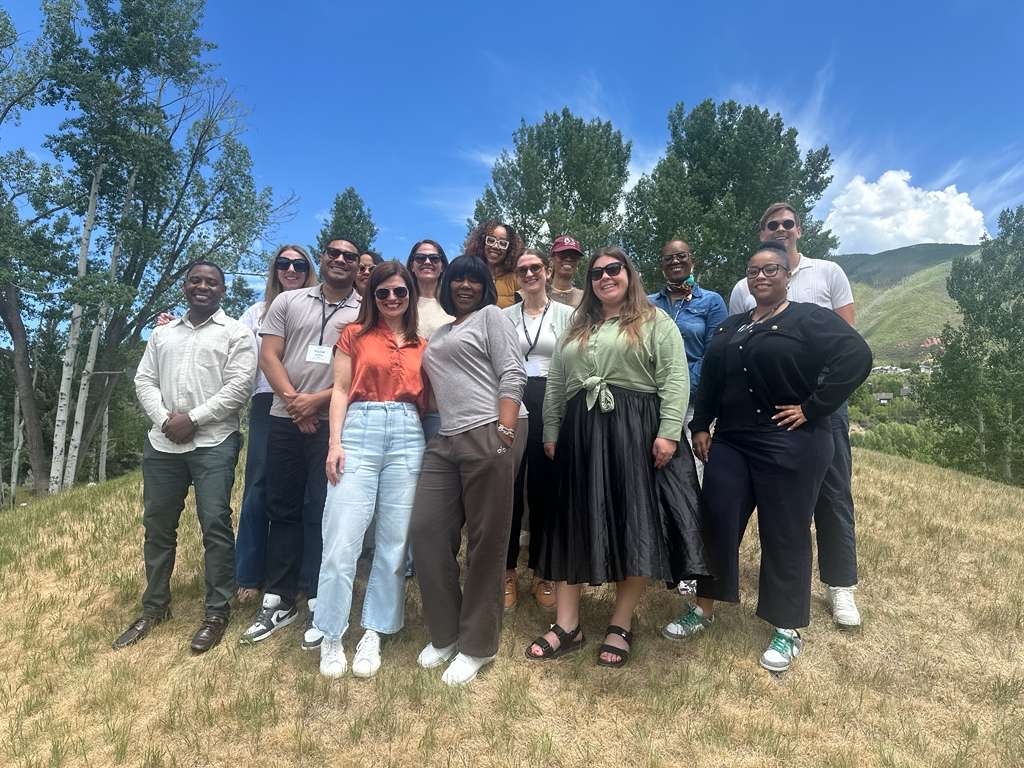
Earlier this month, corporate leaders from across industries gathered in Aspen for the first of three seminars as part of the 2026 Economic Mobility Fellowship. It’s rare and inspiring to get fourteen Fellows in a room together and watch their connection blossom into something greater than the sum of its parts. Even as we basked in the early June sun, it wasn’t lost on the group that the location of Aspen represents the extreme inequality many of them are working against. But its remoteness offered a respite, too. In the Aspen tradition, the space to reflect and connect is essential to the work of economic mobility—a chance to both recharge and reframe.
These Fellows take on challenges many people would prefer not to think about. They are responding to rising economic inequality in the U.S, which is now home to the most unequal distribution of wealth among industrialized countries. Against this backdrop, the Aspen Institute Economic Mobility Fellowship was founded, in part, to help innovative leaders scale projects that both drive business value and address widening income and wealth gaps. It also offers a rare luxury: the opportunity to advance their projects alongside peers, backed by a sponsoring company invested in seeing it through.
Each Fellow is selected based on their role, experience, skills, and capacities–as well as their project’s potential for economic and business impact. Three times over the course of their Fellowship year, Fellows gather for a four-day intensive in-person seminar, which creates room to step back from the noise of daily life and to think deeply about who they are and the impact they hope to have.
Through a bespoke curriculum, seminars offer the chance to push their projects forward and benefit from insights from peers across sectors. Fellows also have the chance to connect with coaches who provide best practices in intrapreneurship they can apply to their work, and throughout their careers. They leave with new tools, clearer focus and renewed conviction to achieve their goals.
The landscape for the Fellowship has become more volatile: mounting economic pressure, political polarization, and the fast rise of AI are all destabilizing the financial well-being and prospects of our country’s most marginalized. For our Fellows, the turbulence reshapes what’s possible, narrowing their resources and their room to maneuver. One Fellow described working in the current environment as “flying blind,” and was met with collective nods. Yet, through hearing their reflections on navigating constraints, watching entire departments get reorganized out from under them, having to sanitize the language they operate in—their deep drive for impact kept them engaged in spite of these headwinds. As another Fellow put it: “Even if I’m afraid, I still move.”
Even still, it can be isolating to keep a project alive while priorities shift abruptly around you. Unsurprisingly, Fellows embraced the camaraderie of the group experience. That feeling came from being around other people doing this work: people who get it, who are also tired and still showing up, who believe business can build ladders to economic mobility for low-income workers and communities.
On the last day, during the group naming portion of the seminar, they named themselves “Good Trouble.” That felt right.
Texas public schools lost about 76,000 students in the 2025-26 school year, the first enrollment decline outside the Covid-19 pandemic...

If you’re considering a home equity loan and wondering whether you can deduct the interest on your taxes, the answer...
Articles Single-family rentals (SFR) now house 41% of the U.S. renter population, according to Rentometer Mid-Year...