Tech can be an invitation to knock on your neighbor’s door

This story was originally published on Weave’s newsletter. Every week, you’ll get resources on how to weave our communities and restore social trust.
For over a decade, Josh Nesbit ran a global health nonprofit that built software for community health workers to take care of their neighbors. They went door-by-door supporting each other. Over the years, they knocked on over 100 million doors worldwide. But when Josh looked at his own life, he saw a disconnect: he had never knocked on a single neighbor’s door of his Outer Sunset neighborhood in San Francisco, Calif.
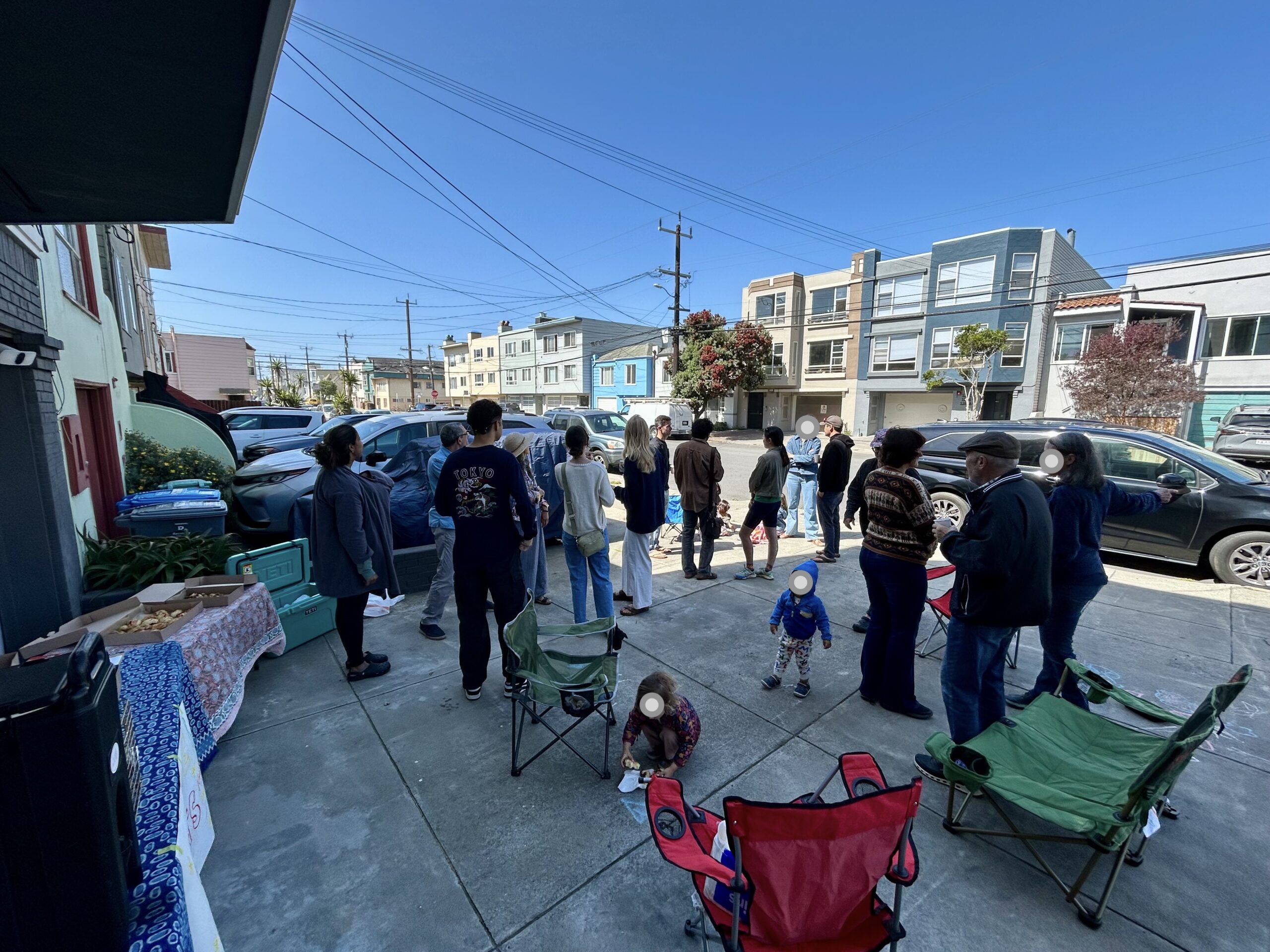
He wanted his children to grow up in a tight-knit community where “they would feel reciprocity in the air as they walk through the block,” he says. He brought it up with his family and a few neighbors, and they decided to host a coffee and donuts party on their driveway. His daughter drew flyers and put them in every nook and cranny in the neighborhood. She even hung a poster outside her third floor window so that everyone knew they were invited.
The response was overwhelming. People showed up and even wrote handwritten notes expressing their gratitude. “People were waiting for an invitation,” Nesbit says. “I think in American culture, what a lot of us are waiting for and needing is an invitation.”
After the driveway gathering, the neighbors formed a group to plan a block party. From there, they kept growing and deepening relationships with each other. But as they brought more people in, they realized they could use a few tools to make neighborhood life easier. “We started thinking that tech could help us with our vision for neighborhood and community life. And rather than waiting for anyone to build anything for us, we just started building things for ourselves with each other,” he says.
When someone complained about getting street sweeping parking tickets, Nesbit built a simple website for the neighborhood to send out text reminders. Then they used the site to sign up for block party roles, which successfully mixed long-time friends with neighbors they had never met. “The tech brought a little bit of magic to the neighborhood. But it’s like new muscles that you need to exercise and strengthen, so we are able to fully explore our creativity and build the sorts of things that we need and dream up.”
Exercising these new muscles required trying new things. So when a friend mentioned that he had bought a bunch of supplies for his son’s birthday party and had not found a neighborly way to lend them to other folks, Nesbit suggested they build a simple tech tool and share it with friends. It became Community Supplies, a space for neighbors to share stuff with each other.
Unlike other free or buy-nothing groups, this platform is all about building relationships between neighbors. If you want to borrow something, the platform sends an email to connect you directly to the owner of the thing, and when you go pick it up, you are invited to chat with the person. “Part of this is about us getting to know each other through the sharing of the things,” says Nesbit.
All of these experiences inspired Josh Nesbit and Deborah Tien, after meeting at a Connective Tissue gathering last year, to launch the Relational Tech Project to help neighbors support each other, dream together, and build what they need. As they state on their website, “The Relational Tech Project (RTP) is stewarding a commons where local builders can learn, share, and remix tools together to cultivate healthy relational soil in our communities.”
Their website includes the Relational Tech Studio, a design space that allows folks to implement ideas that other neighbors have built, like Community Supplies, or prototype one of their own. The Community Supplies platform has been implemented in over 200 separate neighborhoods all over the world. If folks have an idea for a tool that isn’t in the library, they can request a “Gift Build” where one of the RTP team members will help set them up with the right tools to make it a reality.
“We define relational tech as two-fold. It’s both the purpose and the process. The purpose is creating a tool that will foster care and connection in our lives,” he explains. “But also, every part of the process of building the tech must bring us closer to each other. It’s collaborative and built between and for neighbors.”

Graduation is a big milestone, and the last thing most people want to think about afterward is loan payments. But...

When Jacqueline opened the doors of her independent pharmacy and wellness center in Ypsilanti in May 2025, she walked into...

Doing your own taxes is way easier than it seems, and for most filers the easiest method is tax software...