Everything You Need to Know About Tax Brackets and How Your Taxable Income Is Calculated


If you’ve ever wondered why your tax bill looks different each year, you’re not alone. Every year, many Americans go through tax season feeling the same sense of uncertainty about what they owe. And that’s usually because the Internal Revenue Service (IRS) updates federal income tax brackets to keep up with the rising cost of living and inflation in the country.
Instead of a single flat rate, your earnings are divided into sections taxed differently. This can change how much you pay overall. Even if your salary increases, only part of your income may move into a higher bracket.
So what does that actually mean for you as a taxpayer? And how do you know which bracket your income falls into? We’ve created this simple guide to explain the basics and make the process easier to understand.
Tax brackets in the U.S. are like steps on a ladder. Each step of your income is taxed at its own rate under a progressive tax system. And moving up a step doesn’t mean your entire income suddenly gets taxed more.
For example, if your taxable income for 2025 is $50,000. You don’t pay one flat tax rate on that full amount. Instead:
Many people worry that a raise will make them pay more in taxes overall. Actually, only the extra income in the higher bracket is taxed more.
Some people also assume that getting a bonus means paying extra taxes. While employers may withhold a flat rate upfront, your bonus is ultimately taxed along with your regular income at your normal tax rates.
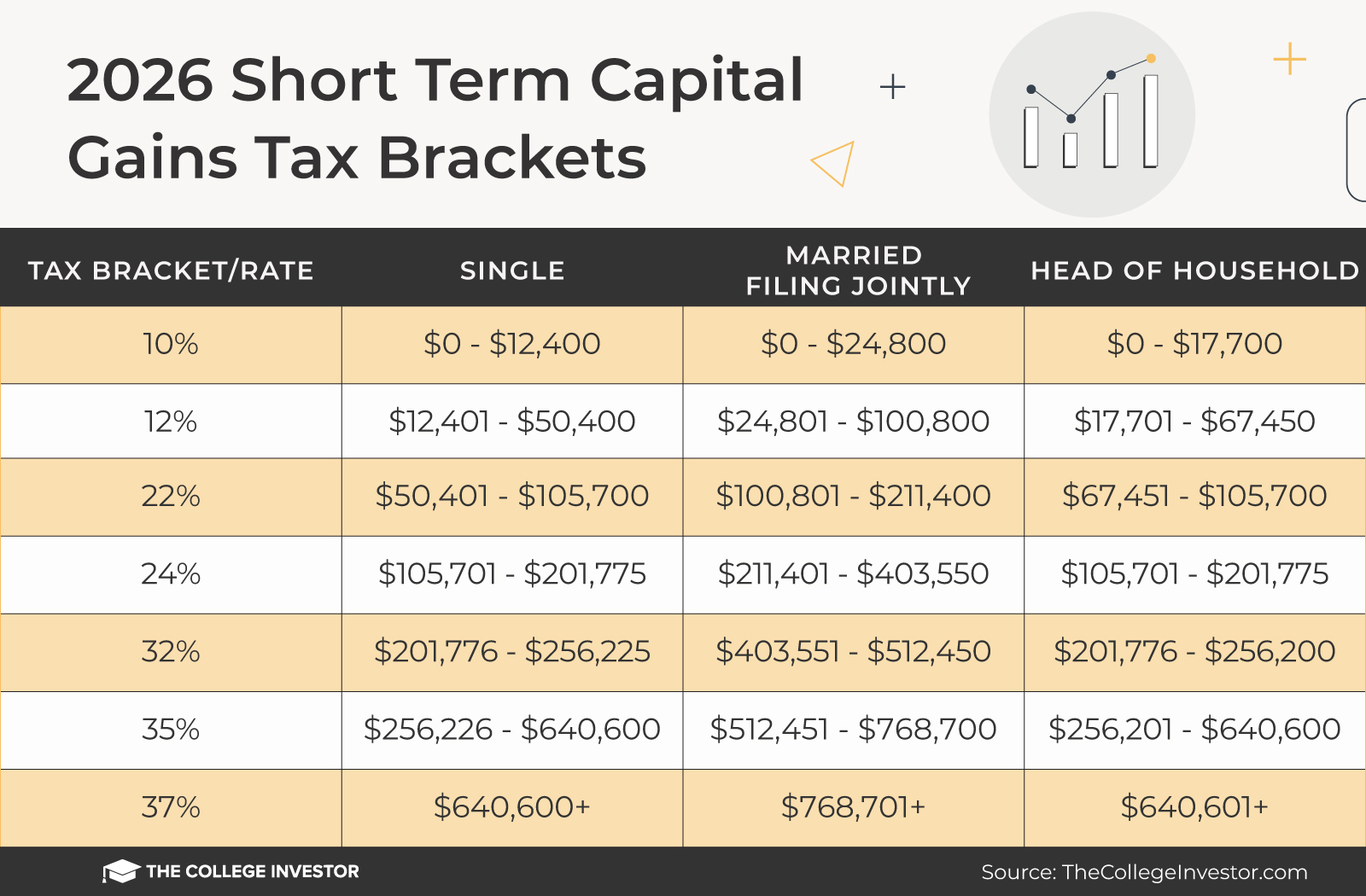
According to the IRS, income tax brackets for 2025 include seven federal tax rates: 10%, 12%, 22%, 24%, 32%, 35%, and 37%. The bracket you fall into depends on your filing status — single, married filing jointly, married filing separately, or head of household.
To find your bracket:
For single filers, here’s what the taxable income brackets look like for the 2025 tax season:
| Tax Rate | Income Range |
| 10% | $0 – $11,925 |
| 12% | $11,926 – $48,475 |
| 22% | $48,476 – $103,350 |
| 24% | $103,351 – $197,300 |
| 32% | $197,301 – $250,525 |
| 35% | $250,526 – $626,350 |
| 37% | Over $626,350 |
Married couples filing jointly have wider brackets, meaning they can earn more before hitting the same rates.
Note: These figures apply to income earned in 2025, which you’ll report on your 2026 tax return. For 2026, the standard deduction is set by the IRS at $16,100 for single filers and $32,200 for those filing jointly. The IRS adjusts these ranges every year based on inflation, so the exact numbers change slightly from year to year.
Your tax bracket is based on your taxable income, not your gross income. Gross income is everything you earn, including salary, tips, freelance pay, investments, and more. But the IRS doesn’t use that to determine your bracket. Instead, they look at your taxable income, which is what’s left after deductions and adjustments.
Here’s how it works:
For example, if you earn $60,000 and take the $15,750 standard deduction as a single filer, your taxable income is $44,250. That mostly falls in the 12% bracket, not the 22% bracket your full $60,000 might suggest.
The IRS considers almost any money or value you receive as income. That can include cash, property, or services you’re paid with. If it adds to your earnings, it’s usually taxable unless the law specifically says otherwise.
Common examples of taxable income include:
Not all money you receive is subject to tax. Below are some common examples of income that is generally non-taxable:
If you reduce your taxable income, you pay less in taxes. Many financial experts recommend looking closely at your potential deductions each year to ensure you aren’t paying more than necessary.
The One Big Beautiful Bill Act (OBBBA) of 2025 also introduced a new senior deduction of up to $6,000 for single filers and $12,000 for married couples, with the benefit phasing out at higher incomes. This specific deduction is available through 2028 and is a significant help for those on fixed incomes.
Other ways to lower taxable income include:
Federal tax brackets do not include Social Security and Medicare taxes. Federal income tax (based on your bracket) is one thing, but “payroll taxes” (Federal Insurance Contributions Act (FICA) are another.
Unlike income tax brackets, these FICA taxes don’t care about your deductions. They are taken out of every dollar of your gross pay from day one.
Your marginal tax rate is the tax on your next dollar earned, showing how much extra income (like a raise or bonus) will actually cost you. Your effective tax rate is the average of all taxes you pay, showing how much of your total income is taken by the government.
For example, if you earn $60,000 a year, part of your income might fall into a 22% tax bracket (your marginal rate), but after accounting for lower rates on the earlier portions of your income, your effective rate might be closer to 14%. That means while your top bracket is 22%, you’re actually paying 14% of your total income in taxes after deductions.
Not all income is taxed using the standard tax brackets and rates. Investment income is typically treated differently from regular earnings. And interest, dividends, and capital gains may be taxed at different rates depending on how long the investment is held and the type of asset involved.
If you sell an investment (like stocks or a home) for a profit, you might pay Capital Gains tax. Long-term capital gains often have lower rates (0%, 15%, or 20%) than your regular salary. This is another way the tax code tries to encourage long-term investing.
Understanding how your investments are taxed can help you plan when to sell assets and how to manage your portfolio more efficiently.
Federal taxes are the same for everyone, but state taxes can look very different depending on where you live.
If you are moving for work or considering a new job, many financial advisors suggest looking at the total tax picture for both state and federal tax systems to see how it affects your paycheck, tax refund, and retirement plan.
While paying less in taxes sounds great, being in a higher tax bracket usually means you are making more money. Because the U.S. uses a progressive system, you will always have more “take-home” pay after a raise, even if that raise moves you into a higher tier.
Some people choose to manage their income to stay just below a bracket threshold—for example, by putting more money into a 401(k) or a HSA. This is a common strategy used to lower taxable income and keep more money in retirement savings rather than sending it to the IRS.
Knowing how tax brackets and taxable income work gives you more control over your financial decisions. It allows you to plan ahead, avoid surprises, and take advantage of opportunities to reduce your tax burden.
For example, you may choose to increase retirement contributions, adjust your income timing, or claim deductions that lower your taxable income. These decisions can have a meaningful impact on how much you pay in taxes each year.

Texas public schools lost about 76,000 students in the 2025-26 school year, the first enrollment decline outside the Covid-19 pandemic...

If you’re considering a home equity loan and wondering whether you can deduct the interest on your taxes, the answer...

Articles Single-family rentals (SFR) now house 41% of the U.S. renter population, according to Rentometer Mid-Year...