Medical Residency Match System Labeled A Monopoly By Congress

After four years of medical school and an average of $190,000 in student loan debt, every aspiring doctor in the United States must complete a residency, a supervised training period lasting three to seven years where they practice medicine under experienced physicians before they can obtain a license or board certification.
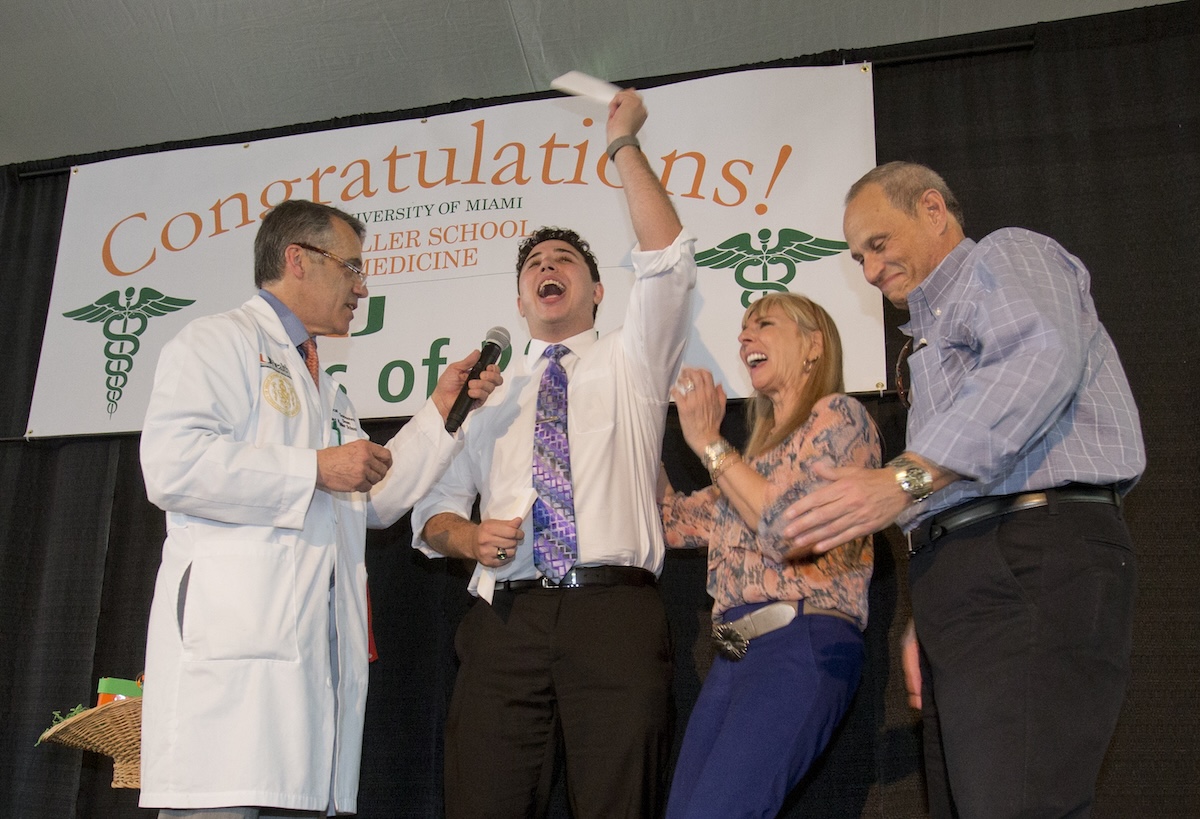
To get placed into a residency program, virtually all medical graduates must go through a centralized system called the Match, run by the National Resident Matching Program (NRMP). Students and hospitals each submit secret rank-order lists of their preferences, and an algorithm assigns binding pairings.
Students cannot negotiate salary, cannot compare offers, and cannot reject the result without risking being blacklisted from future Matches. Match Day, the moment students learn where they will train, is one of the most consequential days of a medical career. Those who fail to match are effectively locked out of practicing medicine for at least a year, unable to earn a physician’s salary or make meaningful progress on their student loans.
A new House Judiciary Committee report released last week (PDF File) concludes that this system functions as an entrenched monopoly that suppresses wages, restricts freedom of choice, and traps young physicians in a cycle of low pay and mounting student loan debt.
The investigation reviewed 1,580 documents from five standard-setting organizations and four teaching hospitals, and included transcribed interviews with two doctors who described the system as one of “indentured servitude.”
The National Resident Matching Program (NRMP), commonly called the Match, is a private nonprofit that has controlled the placement of medical residents for over 70 years.
In 2025, 52,498 applicants registered for the Match and 40,764 residency positions were filled through its algorithm. The system requires both applicants and programs to submit confidential rank-order lists, then uses an algorithm to assign pairings that both sides must accept as binding.
The report details how the Match achieved its monopoly through an “All In Policy” adopted in 2013, which forces participating residency programs to fill all positions exclusively through the Match. It then merged with the National Matching Services (NMS), the competing system used by osteopathic medical students, effectively eliminating the last alternative. As of 2020, virtually all residency programs, positions, and applicants in the United States go through the Match.
The Match explicitly prohibits applicants from soliciting employment commitments or negotiating salary during the process. Applicants who reject their assigned pairing can be labeled “Match violators” and barred from future Matches for one to three years, or permanently.
As one doctor testified to the Committee, “it’s an effective blacklisting to back out of the Match.”
According to the report, the financial impact on aspiring doctors is severe. The average total cost of four years of medical school is $244,000 at public institutions and $323,000 at private schools, according to data cited in the report.
Approximately 75% of all graduating medical students carry an average of $190,000 in student loan debt. Many also take out residency-relocation loans to cover the cost of interviewing and moving to wherever the Match assigns them.
After accumulating that debt, graduates enter a residency system where first-year residents earned an average salary of just $66,712 in 2024. Adjusted for inflation, resident wages were actually higher in 1971 than they are today.
Meanwhile, fully licensed physicians earned an average of $374,000 in 2024. Even under conservative estimates, the average physician salary is still three and a half times greater than the average resident salary.
The pay gap is especially stark for residents nearing the end of training. Residents in their fifth and final year of residency earn between $160,030 and $294,830 less than fully licensed physicians, despite performing “roughly the same” day-to-day clinical work, according to testimony from Dr. Aamir Hussain, a former dermatology resident at Georgetown University.
Resident salaries are also substantially lower than those of other healthcare providers who did not attend medical school. In 2024, nurse practitioners earned a median wage of $132,050 and physician assistants earned $133,260, both nearly double the average resident salary, despite residents holding more advanced degrees.
The report presents data showing that resident wages are abnormally uniform across hospitals, specialties, and geographic regions. There is only a $9,000 difference between the 25th and 75th percentile of first-year resident wages nationally, and virtually no variance between geographic regions beyond cost-of-living adjustments.
Over 95% of hospitals pay every resident the same starting salary regardless of specialty, qualifications, or expected workload. The American Medical Association (AMA) acknowledged in documents produced to the Committee that resident wages “correlate with training year rather than specialty.”
The federal government provided $29 billion to residency programs for graduate medical education (GME) in 2023, averaging roughly $178,303 per resident. Yet teaching hospitals are not required to spend GME funds on residents or their training.
According to the report, hospitals fund over 70% of residency training programs from patient care revenues generated by residents themselves. This means the GME subsidies largely flow to hospital general revenue rather than to improving resident compensation.
The Match’s conduct would normally be subject to scrutiny under Section 1 of the Sherman Act. In 2002, a group of residents filed a class-action lawsuit arguing the Match violated federal antitrust law. A federal court allowed the case to proceed.
But in April 2004, just two months after that ruling, Congress attached a last-minute rider to the Pension Funding Equity Act that granted the Match full antitrust immunity. The exemption not only ended the lawsuit but barred the use of any Match-related evidence in future antitrust proceedings.
Rep. Victoria Spartz reintroduced the Restoring Rights of Medical Residents Act (H.R. 3018) in April 2025, which would repeal the Match’s antitrust exemption by striking Section 207 of the Pension Funding Equity Act of 2004. The Committee report notes that repealing the exemption would not dismantle the Match itself but would restore the ability of courts to evaluate its practices under existing antitrust law.
For medical students managing six-figure student loan balances, the Match creates a financial dilemma. They cannot negotiate salary. They cannot shop for competing offers. They cannot choose their geographic location with any certainty. And if they fail to match at all, they are effectively denied any position for an entire year.
In 2025, at least 11,734 applicants (22.6%) went unmatched on Match Day. An additional 2,308 secured positions through the Supplemental Offer and Acceptance Program (SOAP), a four-day scramble for leftover spots.
That still left a minimum of 9,426 applicants, or 17.9%, without any residency position. Unmatched applicants cannot practice medicine, cannot make meaningful progress on student loan repayment, and face reduced odds of matching in future cycles because hospitals view a prior failure to match as a “black mark.”
The broader consequence, the report argues, is that suppressed resident wages are discouraging qualified students from pursuing medicine at all. In a 2023 survey of medical students, 69% said they were concerned about their income, 63% expressed concerns about burnout, and 60% were worried about clinician shortages.
The AMA itself warns medical students that “it takes years to realize your earning potential.” Professor Kristin Madison of Northeastern University explained to the Committee that depressed wages may push talented graduates toward other careers, reducing both the quantity and quality of the physician workforce.
Don’t Miss These Other Stories:

The National Student Clearinghouse Research Center released its 14th annual High School Benchmarks report on September 17, 2026, tracking where...

If you’re overwhelmed by education debt, you may be asking, “Can I file bankruptcy on student loans?” The answer is...

A dividend is a cash payment a company sends to shareholders, quarterly for most U.S. stocks. Reinvested dividends account for...