Leadership In Conflict: An Immersive Journey to Kigali, Rwanda
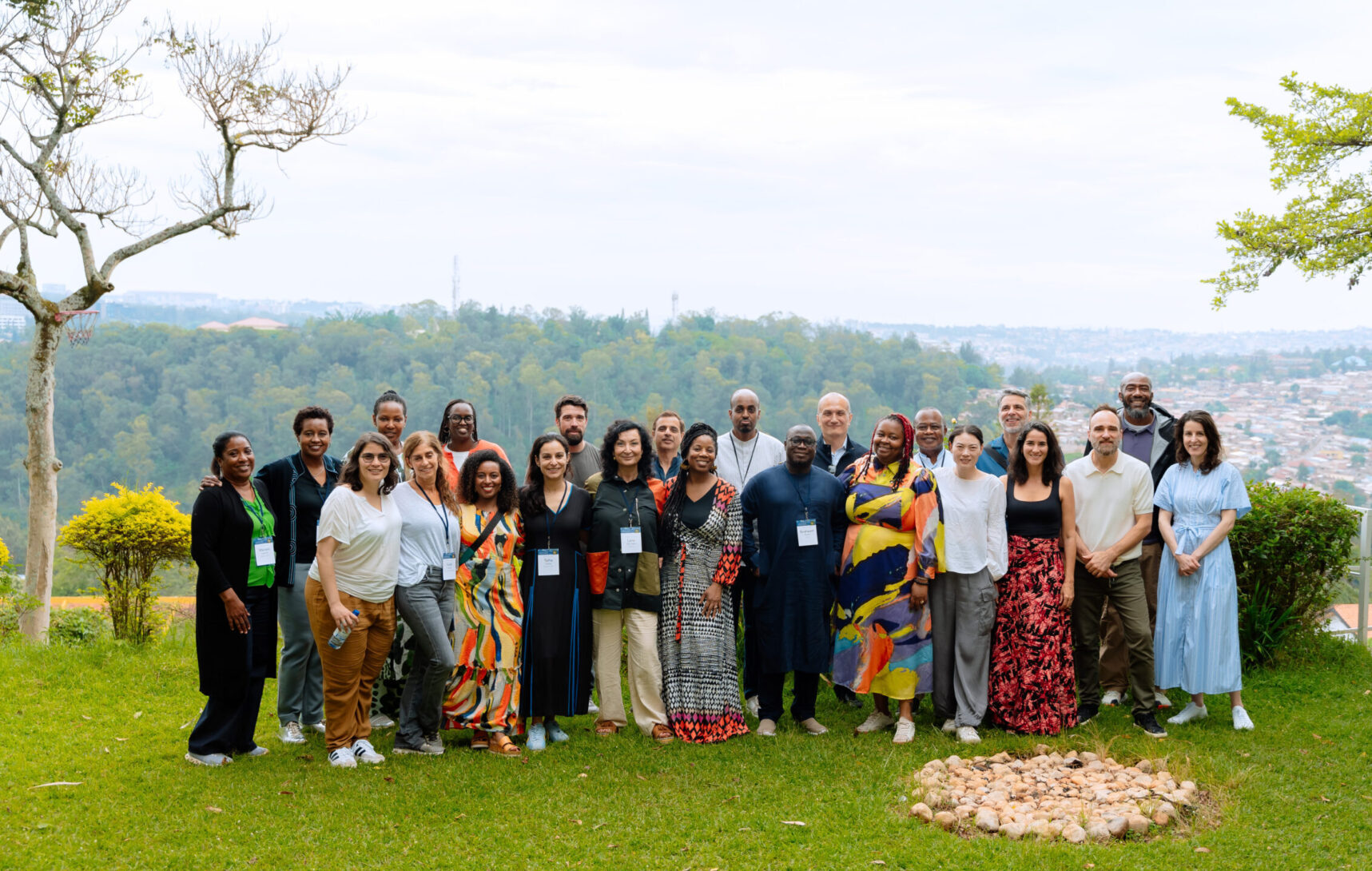

In November 2025, Aspen Fellows from 14 countries—China, Colombia, El Salvador, Ethiopia, India, Kenya, Nigeria, Palestine, Rwanda, South Africa, Somalia, Uganda, the UAE and the US—gathered in Kigali, Rwanda to explore what courageous leadership looks like in times of conflict. Many participants carried lived experience of holding conflict and hope in tension, bringing profound depth and urgency to the conversations that unfolded.
Developed in partnership with the McNulty Foundation and curated by Africa Leadership Initiative – East Africa Fellow and McNulty Laureate Hope Azeda along with Africa Leadership Initiative – South Africa Fellow Heather Sonn, Africa Leadership Initiative – East Africa Fellow and Board Chair Mariam Luyombo and AGLN Scholar-In-Residence Austin Choi-Fitzpatrick, this immersive journey used Rwanda’s history as a living “seminar text”—examining the role of hate, leadership failure, and international inaction that contributed to the 1994 genocide, alongside the story of post-conflict healing when the nation collectively chose bridge-building over division.
Participants visited the Kigali Genocide Memorial, where history became visceral and immediate. At Choose Kigali and Inema Arts Center, they witnessed how creativity and innovation continuously fuel transformation. They walked through neighborhoods rebuilt from rubble, spoke with survivors who now lead reconciliation efforts, and sat in dialogue with government officials shaping national policy.
“The Rwanda experience clarified something in me: a hunger for true global citizenship, deeper connection, deeper conversations. To be a global citizen is to return—again and again—to dialogue as a form of world-building and peace-building.”
Jennifer Jin Ma (China Fellowship)
They met with Claver Irakoze, author, educator, and genocide survivor who shared Rwanda’s story not as chronological account but as living memory—from pre-colonial times through the genocide itself and the years of healing that followed. Speaking both as a child who survived and as a parent raising the next generation, he offered a reflection: history is not only what happened but also what we remember, what we carry forward, and how we choose to live after everything breaks.
Participants wrestled with critical questions: How do we rebuild trust after profound fracture? How does effective leadership adapt across the phases of crisis—before, during, and after—knowing there is no single formula? What are the difficult tradeoffs that transformative leadership requires?
April 7 is the International Day of Reflection on the 1994 Genocide Against the Tutsi in Rwanda, marking the beginning of a 100-day public mourning and remembrance period across the country. In observance of this day, the Aspen Global Leadership Network (AGLN) and Skoll Foundation will co-host an afternoon of reflection and dialogue on leadership amid societal fracture.
The event was initiated by Marla Blow, Henry Crown Fellow and CEO & President of the Skoll Foundation, who extended the invitation during the Kigali journey itself.
Claver Irakoze—who was 11 years old when the genocide began—will share Rwanda’s history not as distant chronology, but as living memory. Through his lens, we’ll explore how violence is preceded by years of decisions, narratives, and omissions—and how rebuilding demands intentional remembrance, moral courage, and sustained commitment to preventing future harm.
Claver will be joined by Gayle Smith, former Administrator of USAID, for a fireside chat on Rwanda’s recovery and the responsibility of the international community to strengthen early warning, accountability, and action in the face of emerging threats.
A panel moderated by Africa Leadership Initiative – South Africa Fellow Sharmi Surianarain, Chief Impact Officer at Harambee Youth Accelerator, brought together Diane Karusisi (CEO, Bank of Kigali), Hon. Tesi Rusagera (Minister of State Investments), and Hon. Gaspard Twagirayezu (Former Minister of Education, current CEO of the Rwanda Space Agency) to explore thematic learnings from Rwanda’s redevelopment and the government’s decision to leverage investments in innovation, entrepreneurship, and creativity as a tool for redevelopment and growth. Facilitated discussions on post-conflict leadership challenged participants to grapple with complexity as well—examining how leaders navigate the moral compromises that often accompany profound transformation; and the tension between strict governance and leadership with purpose.
“Leadership also means being a dealer of hope, while having the ability to recognize when a group is committing immoral acts in the name of a higher ideal. A leader’s role is not only to inspire hope, but also to call out wrongdoing when everything else fails.”
Lina Margarita Martínez Patiño (Aspen Colombia)
The immersive format, grounded in the Aspen methodology, created space for honest reflection on leadership’s role in both preventing and healing from conflict. On the final day, inspired by what they’d witnessed in both Colombia and Rwanda, Fellows explored individual and collective action they could carry forward: influencing stakeholders, building societal trust, reimagining organizations to meet this moment in history: a crucial time when global order is shifting and there is an urgent need for innovative solutions driven by ethical leadership.
Jerad Warren (Civil Society Fellowship) andJaime Zablah (Central America Leadership Initiative) are developing a leadership program, Paradoxical Ascent, born directly from the Rwanda experience. Warren is combining 26 years of military service with the intellectual framework of Aspen’s readings, building an immersive leadership development experience that pairs coaching with high-altitude outdoor challenge. Warren believes that being outdoors, in demanding terrain, creates conditions where real leadership breakthroughs happen. He has been in conversation with fellow cohort members about integrating elements of this into the next AGLN immersive visit as a pilot. Warren is also part of a subgroup of Rwanda Fellows working on a broader healing and trauma curriculum for leaders — and sees Paradoxical Ascent as a natural vehicle for delivering it.
Rwanda’s story offers no easy answers. There is no formula for what happened there — no checklist a leader can follow to prevent atrocity or guarantee reconciliation. What Rwanda offers instead is something more valuable: evidence. Proof that choosing healing over hatred is possible. Proof that a society can look at its own wreckage and decide to build something different. The Fellows who left Kigali carried that proof with them. Some are building ventures. Some are building curriculum. Some are building trust, one conversation at a time, in their own communities, their own countries, their own institutions. All of them left asking the question that Rwanda demands of anyone who walks those streets and sits in those memorials: What is my sphere of influence — and what will I do with it?
“Coming to Rwanda, I was able to experience the power of art, memory restoration, reconciliation, and the power of education and politics — seeing the intersectionality of how it’s not one solution that we need, but a variety of ones to actually design a world that centers everyone’s dignity, centers the peace that we’re working for, and what we truly mean when we say human rights”
Antionette D. Carroll (Civil Society Fellowship)
About the Aspen Global Leadership Network
The Aspen Global Leadership Network (AGLN) is a dynamic, worldwide community of nearly 4,000 entrepreneurial leaders from over 60 countries. Spanning business, government, and the nonprofit sector, these leaders share a commitment to enlightened leadership and the drive to tackle the most pressing challenges of our times. Through transformative Fellowship programs and gatherings like the Resnick Aspen Action Forum, AGLN Fellows have the unique opportunity to connect, collaborate, and challenge each other to grow and commit to a lifelong journey of impact.
The post Leadership In Conflict: An Immersive Journey to Kigali, Rwanda appeared first on Aspen Institute.

The National Student Clearinghouse Research Center released its 14th annual High School Benchmarks report on September 17, 2026, tracking where...

If you’re overwhelmed by education debt, you may be asking, “Can I file bankruptcy on student loans?” The answer is...

A dividend is a cash payment a company sends to shareholders, quarterly for most U.S. stocks. Reinvested dividends account for...