Driving Corporate Impact in a Time of Whiplash

Leadership Lessons from the Third Cohort of Aspen Economic Mobility Fellows
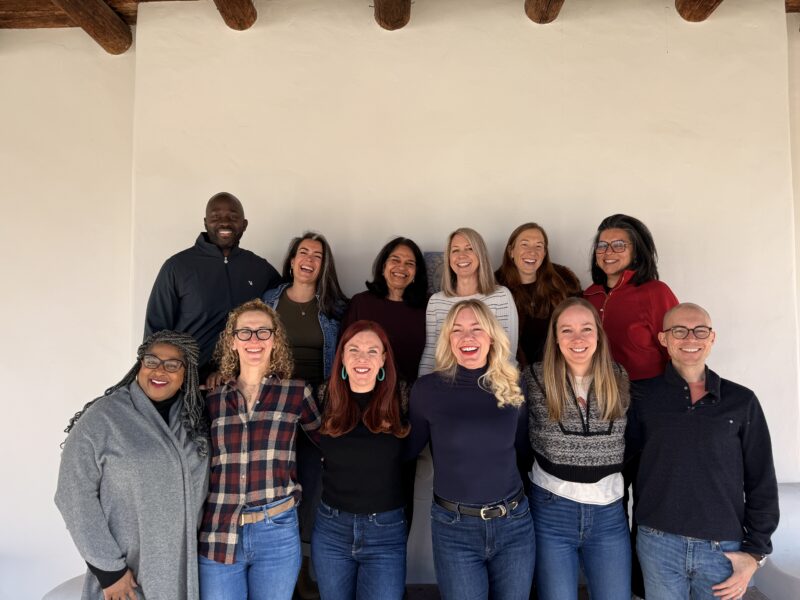
Last week, I returned from the final seminar of our third cohort of Aspen Institute Economic Mobility Fellows. As I listened to their reflections, I was struck by how much the terrain has shifted since we launched this Fellowship three years ago.
We launched the Aspen Economic Mobility Fellowship in 2023 with the ambition to build a movement in which business practice strengthens economic ladders for low-income workers and families. We knew from over 15 years of experience with the First Movers Fellowship that such a movement depends on leaders who shift norms from the inside.
What began for many as a season of growth and visibility has given way to something more volatile: reorganizations, budget cuts, executive departures, acquisitions, political headwinds, and a tightening risk appetite. One Fellow described the past year as “the year of the tightrope.” Another called it “winter.” More than one admitted: this is harder than I expected.
And yet—the work continues.
What I have witnessed is not discouragement, but evolution: a more disciplined, durable understanding of what it takes to advance economic mobility inside large institutions in uncertain times.
In our conversations, a set of hard-earned insights emerged. What follows is a distillation of the collective wisdom of this cohort: lessons about how to drive meaningful change inside large organizations when the ground is constantly shifting beneath you.
Choose Direction Over Speed
In a stable environment, energy can carry you. In a volatile one, speed without direction becomes drift. The Fellows that succeeded most in this moment had three common characteristics. First, they stayed committed to the problem they were solving—not the solution they were advancing. This commitment allowed them to make better decisions when conditions changed. Second, they maintained a tight link to business strategy. Work tethered to talent, productivity, resilience, and long-term growth proved more durable than work positioned as supplemental. Third, the strongest leaders were disciplined in focus. They refined the blueprint, protected what mattered most, and let go of the rest.
Integration Is Protection
A clear pattern emerged across the cohort: standalone initiatives struggle; integrated ones scale. When mobility efforts were woven into procurement, workforce analytics, sustainability, communications, or executive scorecards, they gained traction. The most successful leaders didn’t just integrate their projects into core strategy—they continuously aligned their project to changing conditions through listening, active recalibration, and ongoing monitoring. For a Fellowship designed to build a movement in which business practice strengthens economic ladders, this shift is critical. Movements are not built on isolated programs. They are built when practices become embedded and expected—when norms change.
Personal Leadership Yields Professional Impact
Perhaps the most profound shift I observed was how personal the work has become.
“I am the project,” one Fellow said.
Advancing economic mobility inside large institutions now requires leaders to evolve as quickly as the strategies they are stewarding. Authenticity has become strategic and necessary. In moments of uncertainty, Fellows learn that trust and credibility are built through candor, not polish. Effective leaders have learned to let go of the ‘perfect’ project, adapt to new contexts, and stay flexible amidst the messiness of real change.
Changing norms from the inside often means standing alone. The adaptive challenges demand leaders willing to act and take risk—courage is required at every turn. Thus, more than ever, resilience must be intentional. Leaders must create rituals that allow them to step away from the noise, turn down the heat, and regain perspective. Busyness is not progress, and sustaining energy over the long term requires caring for the self as deliberately as they care for the strategy.
What This Means for the Movement
Our Fellows understand something deeply: durable change inside business does not come from bold standalone gestures. It comes from disciplined direction, relentless integration, courageous leadership, and sustained humanity.
This moment is testing that model—and validating it.
When leaders tie mobility to strategy, embed it into operations, and persist through volatility, they do more than advance a project. They reshape expectations about what good business looks like.
The leaders who will join us for the next cohort of the Fellowship may continue to face an unpredictable environment. The path may not be linear. But this work is not about sprinting toward a headline. It is about steady influence inside complex systems—anchoring purpose to performance and continuing to walk the tightrope with balance.
Nominations for the Economic Mobility Fellowship and the First Mover Fellowship are now open.
Want more insights like these? Sign up to receive thought leadership and updates from the Business & Society Program each month!
var _ctct_m = “bd512d0aaa0692b8f942a0754b25c12b”;
The post Driving Corporate Impact in a Time of Whiplash appeared first on Aspen Institute.
Texas public schools lost about 76,000 students in the 2025-26 school year, the first enrollment decline outside the Covid-19 pandemic...

If you’re considering a home equity loan and wondering whether you can deduct the interest on your taxes, the answer...

Articles Single-family rentals (SFR) now house 41% of the U.S. renter population, according to Rentometer Mid-Year...