High school is the place to bridge divides

This story was originally published on Weave’s newsletter. Every week, you’ll get resources on how to weave our communities and restore social trust.
Kansas City, MO, sits at the crossroads of several divides. It’s a blue city in a largely red state. It’s an urban area surrounded by rural communities. Neighborhoods are highly segregated by race. It is even physically divided between two states: Missouri and Kansas. It’s also the home of American Public Square, an organization built on the belief that communities torn by divisions can be reconnected through civil discourse, engagement, and education. And they are trusting that teenagers can lead this work.
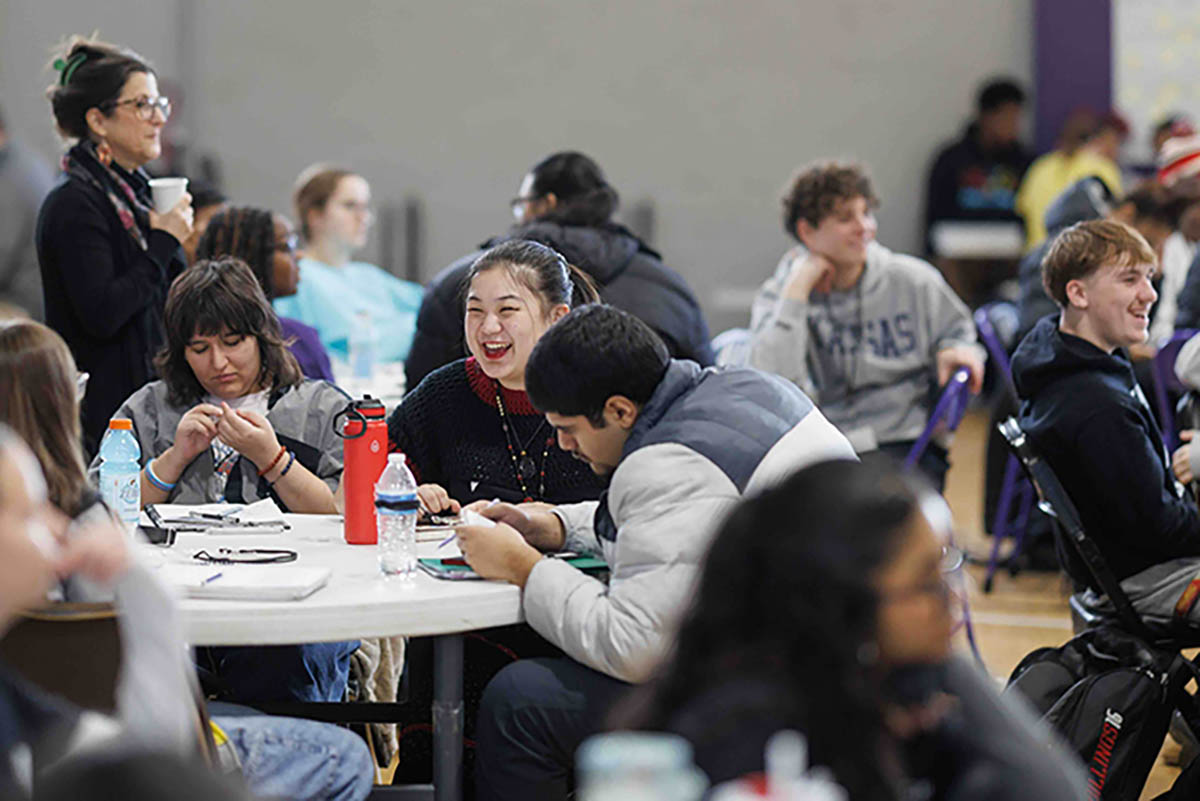
One of their main programs is the Civics Education Initiative, a year-long program that brings together 85 high school students from nine schools to organize a forum with expert panelists to tackle the thorniest issues facing their communities. In the past, the youth have chosen topics like gun violence, homelessness, and immigration enforcement.
“The students tend to pick topics that directly affect them,” says Ryan Bernsten, Director of Brand and Partnerships at American Public Square. “They’re not afraid. They want to go for things that feel urgent to them.”
The students start by taking a workshop in their classroom where they explore polarization and how to have productive civil discourse to address it. Each school then selects a group of Student Ambassadors to join five in-person collaborative workdays throughout the year.
During the in-person gatherings, the students choose the topic they want to address at the forum. Then they research facts together, brainstorm expert panelists, and design the panel. Students also do guided activities where they practice sharing their own perspectives through storytelling to learn how to foster civil discourse.
“Not all the exercises are very serious. One day, we asked them all to share an unpopular opinion. Some of them said Christmas music is annoying. Some of them said Jeeps are not real cars. It sounds goofy, but it helps them practice expressing an opinion in front of 85 other kids,” says Bernsten.
They also learn to use tools like American Public Square’s Civility Tools, that provide a structure for civil conversations, ensuring that people can engage with difficult subjects without falling into heated arguments.
The forum is open to the public and is usually attended by 400 to 500 community members. Students are intentional in creating an environment where everyone feels welcomed and respected. “We hope that the audience, if they don’t get anything from the topic itself, gains from watching people with different perspectives deliberate with each other—not arguing or going at each other’s throats, but just trying to understand and have a productive discussion,” says Lynn Setter, a sophomore at Olathe North High School who helped organize the 2023 student forum on abortion.
While the students work toward the event all year, many find more value in the year-long process itself as they find connection and community with the other students. “One of the biggest things we hear from students is that they love the opportunity to connect with other youth across these schools that they wouldn’t otherwise have the opportunity to engage with,” says Claire Bishop, Executive Director at American Public Square. “They’re building lasting friendships and relationships across all sorts of divides.”
After the event concludes, several of the most engaged students choose to join American Public Square’s Alumni program, where a smaller cohort of around 12 alumni receives year-long specialized guidance and tools to get engaged in their communities. The students are responsible for finding the opportunities themselves and have done anything from volunteering with organizations in their community to focusing on building trusting relationships with neighbors. This year, the alumni also decided as a group to host an event in the Spring where they will speak on a panel about what it means to them to steward their democracy through active citizenship and how others can learn to do the same.
“We hope that everyone who goes through the Civics Education Program internalizes the sense of agency they developed and take the skills that they’ve learned in building those bridges back to their communities. And if they stick around in the Alumni program, they use the additional tools and resources to go back and strengthen the ties in their community,” says Bishop.
American Public Square is one of the 25 Community Hosts that have partnered with Weave to support weavers in new locations with tools and resources, including Weaver Awards. Every two weeks, we’ll share a new story and tools from different Community Hosts.
The post High school is the place to bridge divides appeared first on Aspen Institute.
Texas public schools lost about 76,000 students in the 2025-26 school year, the first enrollment decline outside the Covid-19 pandemic...

If you’re considering a home equity loan and wondering whether you can deduct the interest on your taxes, the answer...
Articles Single-family rentals (SFR) now house 41% of the U.S. renter population, according to Rentometer Mid-Year...