Now Entering the Bad Bunny Era: Hispanic Impact on the Global Creative Economy
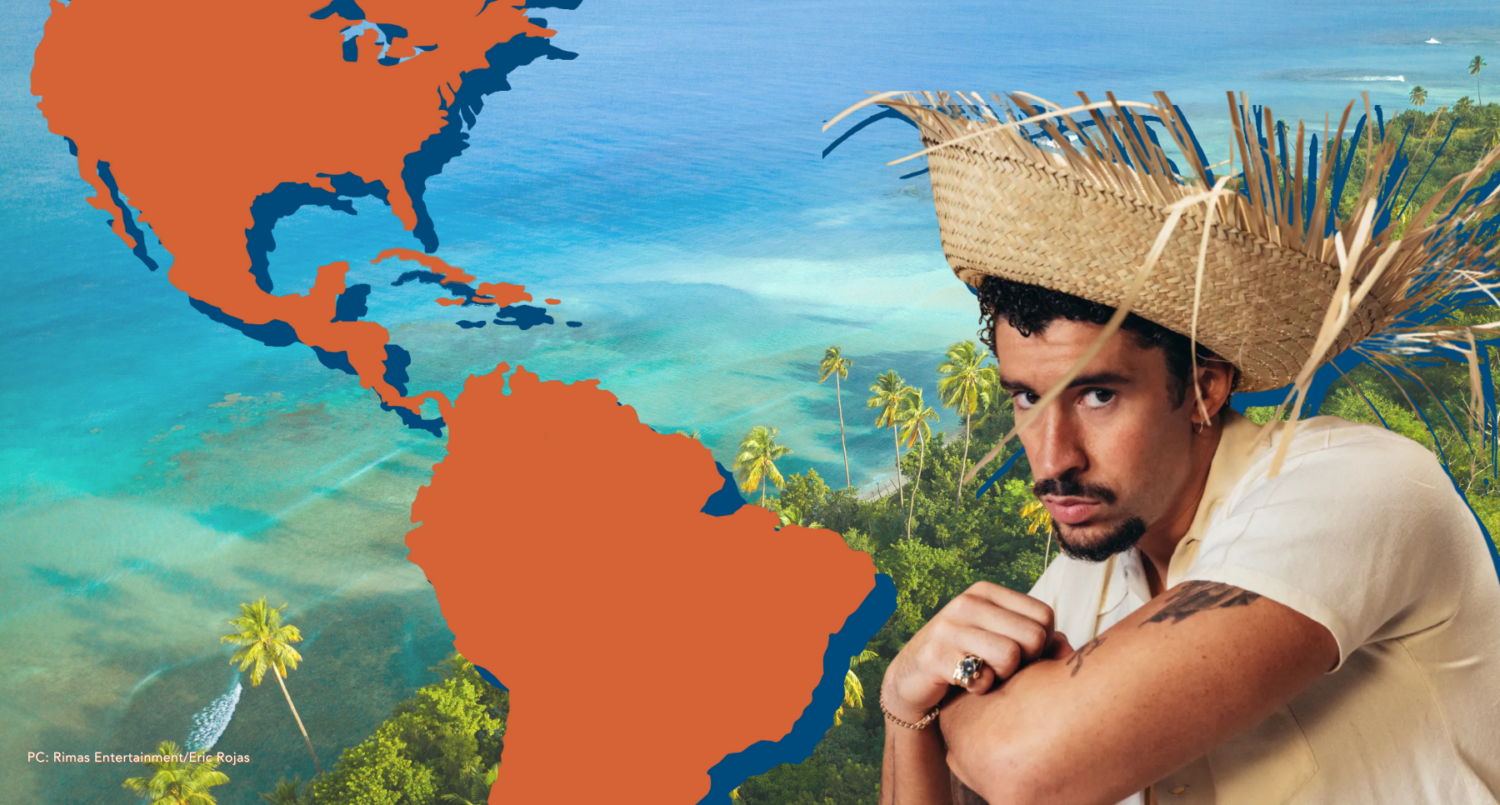

“On February 8 the world will dance.” With that line, the Super Bowl’s teaser made one thing clear: the 2026 halftime show belonged to Bad Bunny. And he delivered on his promise, turning the field into a giant party of culture, community and joy, that the entire world was invited to.
Born Benito Antonio Martínez Ocasio, the Puerto Rican superstar is the most streamed artist on the planet, selling out stadiums worldwide while singing entirely in Spanish. On Super Bowl Sunday, he used a global platform to show that Latino culture is not a sidebar to the American story; it is one of its most dynamic societal and economic engines.
Early figures suggest Bad Bunny’s performance may have been the most watched halftime show in history, with more than 135 million viewers. Sunday’s performance made one thing clear: Latino culture commanded the world’s attention and used that spotlight to tell a story of resilience and cross-border collaboration.
We’ve officially entered the Bad Bunny Era and it’s one that promises to last.
The NFL didn’t choose Bad Bunny by accident. To expand its global audience, the league turned to a Latino superstar with nearly 20 billion streams in 2025 and a ground-breaking Grammy-winning album – reach the NFL can’t manufacture on its own. As Hispanics soon surpass 20 percent of the U.S. population and produce $4.1 trillion in economic output (and rising), Bad Bunny’s ascent and broad-based appeal makes clear what institutions are finally catching up to: Latino creators are no longer on the periphery, but central to the world’s creative economy.
And the economics back it up: a recent McKinsey & Company report developed through a knowledge partnership with Aspen Conexión projects the U.S. sports entertainment economy will reach $300 billion by 2035, with roughly a third of that growth driven entirely by Latino fans. Latin music generated $1.4 billion in sales in the U.S. alone in 2024. And in the hours after the halftime show, Apple Music reported Bad Bunny’s simultaneous listeners surged sevenfold, with the strongest activity spanning the U.S., Canada, Mexico, Colombia, and Peru. Culture is no longer just influence. It is an economic strategy.
This is the creative economy in action, where culture, heritage, and creativity generate real economic power. But what happened to produce this vibrant, and economically powerful, moment for Latino creative innovation and its mainstream appeal?
Digital platforms have collapsed geography. Streaming, short-form video, and social media now allow creative work born in Miami, San Juan, or Mexico City to reach global audiences almost instantly. Latino content which resonates with younger and emerging audiences benefited directly from this shift as access barriers fall and global demand expands. Industry investment reflects this reality: Netflix has committed $1 billion to productions in Mexico by 2028, while Spanish-language platforms rapidly scale across the Americas.
Yet despite the amazing trendlines, the boom is uneven. Many Latino creators still lack access to valuable infrastructure, capital, and networks to launch their careers. If the Bad Bunny era is to become an inclusive and sustainable boom in America, certain policy and market moves are necessary at both the public and private levels.
Public and private investment in the US should focus on building conditions for long-term talent growth, from bilingual workforce development to the infrastructure that supports creative production, including in the Latino cultural sector. Done right, these investments expand the talent pipeline, strengthen local economies, and position cities to truly benefit from moments with massive Latino audiences, including the FIFA World Cup, the Olympics to film festivals, art fairs, and yes, Bad Bunny concerts.
Platforms have democratized discovery, but not fair pay. Closing that gap will require governments, companies, philanthropies, and platforms to create more transparent systems for how work is tracked and compensated, strengthen copyright protections, and expand financing that actually reaches early-stage creators.
Bad Bunny’s rise from bagging groceries in Puerto Rico to global superstardom drives home why this matters: talent may open the door, but lasting success depends on who owns the rights, controls the data, and captures the value once audiences arrive. His label reportedly secured a deal that allowed him to retain the majority of his music and streaming revenue, a structure still rare even for top-tier artists.
Cultural policy should invest beyond a handful of major cities by connecting creative industries to tourism and education and supporting cross-border collaborations that help creative businesses grow across the Americas. Today, investment is concentrated in places like Miami, Los Angeles, and New York, while Latino-majority regions such as Puerto Rico generate billions in creative value but lack the infrastructure to keep creators local. When cities invest in creative infrastructure, creators can build real careers at home, rather than forcing them to move elsewhere to make it.
Bad Bunny isn’t the whole story—he’s the headline. Demographic shifts, geopolitical trends, and a maturing digital economy suggest this influence is here to stay, with Latino creators forming an ecosystem that can result in shared economic growth for American communities and businesses writ large.
To turn cultural momentum into lasting prosperity for the U.S. and other markets, policymakers, investors, and platforms must treat culture as infrastructure by investing in skills, fixing market rules, and protecting creators’ rights. Do that, and what begins with a chart-topping artist can become a decades-long engine of jobs, businesses, and cultural influences across the US and the Americas.
Because no matter how technology evolves, the power of an original Latin song, artwork, or film cannot be replaced, and communities crave that human spark more than ever.
ABOUT ASPEN CONEXIÓN
Aspen Conexión, a policy program of the Aspen Institute, strengthens the Latino community’s role in advancing U.S. innovation and prosperity by activating strategic ties across the Americas and Spain. We do this by connecting Latino talent, leadership, and economic ecosystems in the United States with counterparts abroad.
Our approach is grounded in three core pillars: igniting transformative leadership programs that deepen cross-border collaboration; curating high-impact convenings with decision-makers to advance ideas across business, culture, and policy; and activating strategic partnerships and applied research to address critical knowledge gaps and inform action.
Learn how we’re driving impact: www.aspenconexion.org
header photo credit: Rimas Entertainment/Eric Rojas
Texas public schools lost about 76,000 students in the 2025-26 school year, the first enrollment decline outside the Covid-19 pandemic...

If you’re considering a home equity loan and wondering whether you can deduct the interest on your taxes, the answer...

Articles Single-family rentals (SFR) now house 41% of the U.S. renter population, according to Rentometer Mid-Year...