SEC, Commonwealth Reach Settlement in Share Class Lawsuit
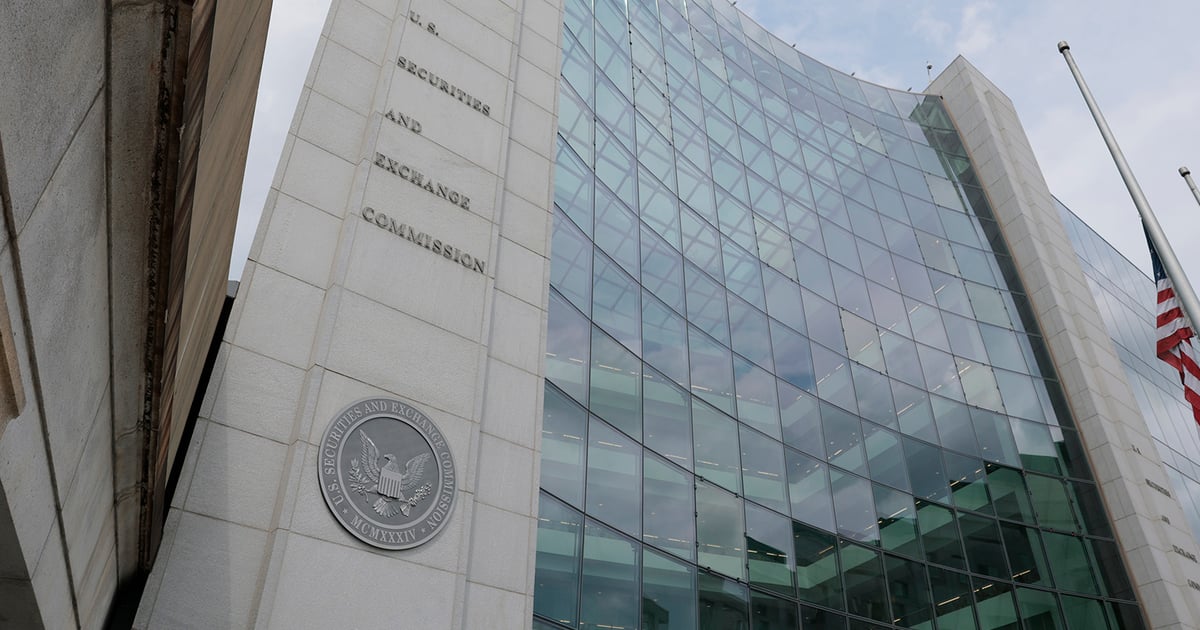

The Securities and Exchange Commission has reached a settlement with Commonwealth Financial Network, leading to the conclusion of a legal battle that started in 2019, when the agency charged the Massachusetts-based independent broker/dealer for failing to disclose conflicts of interest when recommending certain mutual fund share classes for clients. That resulted in a $93 million penalty.
Late last month, the SEC and Commonwealth filed a joint motion to extend the stay in the case until March 31, saying they’ve reached a settlement. On Monday, U.S. District Judge Indira Talwani granted the extension to give them time to negotiate the terms of the settlement.
The details of the settlement were not disclosed.
A spokeswoman for Commonwealth did not immediately return a request for comment.
According to the original order, Commonwealth used National Financial Services as its clearing broker. Under that arrangement, reps could recommend mutual fund shares through a No Transaction Fee program and a program with transaction fees.
But Commonwealth and NFS had a revenue-sharing agreement that made the firm more money to put clients in certain mutual fund share classes, according to the original order. At times, those share classes were more expensive for clients than other share classes of the same mutual funds, not including fees.
Between July 2014 and March 2018, Commonwealth received about $58.7 million from client assets invested in NTF mutual fund share classes, while receiving $77 million in payments from client assets invested in share classes with transaction fees between July 2014 and December 2018.
The SEC argued that Commonwealth knew of the more affordable options (even recommending them to clients in certain programs) and that these alternatives would result in lower revenue for the firm.
Commonwealth failed to alert clients to the revenue it generated from higher-cost share class recommendations and that those recommendations were conflicted. Even after Commonwealth amended its disclosures in 2017, the firm didn’t make it clear that the conflicts were not theoretical but real.
In 2024, Judge Talwani ordered Commonwealth to pay $65,588,906 in disgorgement, as well as prejudgment interest totaling $21,185,162 and a civil penalty totaling $6.5 million.
About a month later, Commonwealth moved to appeal the case to the U.S. Court of Appeals for the First Circuit.
Last year, the appeals court overturned the judgment against Commonwealth. In their opinion, the judges wrote they agreed with Commonwealth’s argument that aspects of the case should have been heard in a jury trial, as opposed to the SEC winning a motion for summary judgment (in which a judge decides on the merits of a case before reaching a jury). That happened the same week LPL Financial announced it would acquire Commonwealth for $2.7 billion in cash.
At that time, the court remanded the case back to the same district where arguments were first heard.
The SEC has settled dozens of share class-related cases with registrants over the years, including through a 2018 self-disclosure initiative that urged firms to self-report share-class violations to avoid higher penalties.
LPL closed on its acquisition of Commonwealth in August of last year, saying that it expects to retain 90% of the IBD’s advisors. On its recent earnings call, LPL CEO Rich Steinmeier said retention is in the low 80% range for advisor assets staying with Commonwealth. LPL said those are larger, faster-growing and higher producers that have agreed to stay.
Texas public schools lost about 76,000 students in the 2025-26 school year, the first enrollment decline outside the Covid-19 pandemic...

If you’re considering a home equity loan and wondering whether you can deduct the interest on your taxes, the answer...

Articles Single-family rentals (SFR) now house 41% of the U.S. renter population, according to Rentometer Mid-Year...