From Rural Education to the Civil Rights Movement: How Benjamin E. Mays Shaped Martin Luther King Jr. and the Future of Civil Rights Leaders
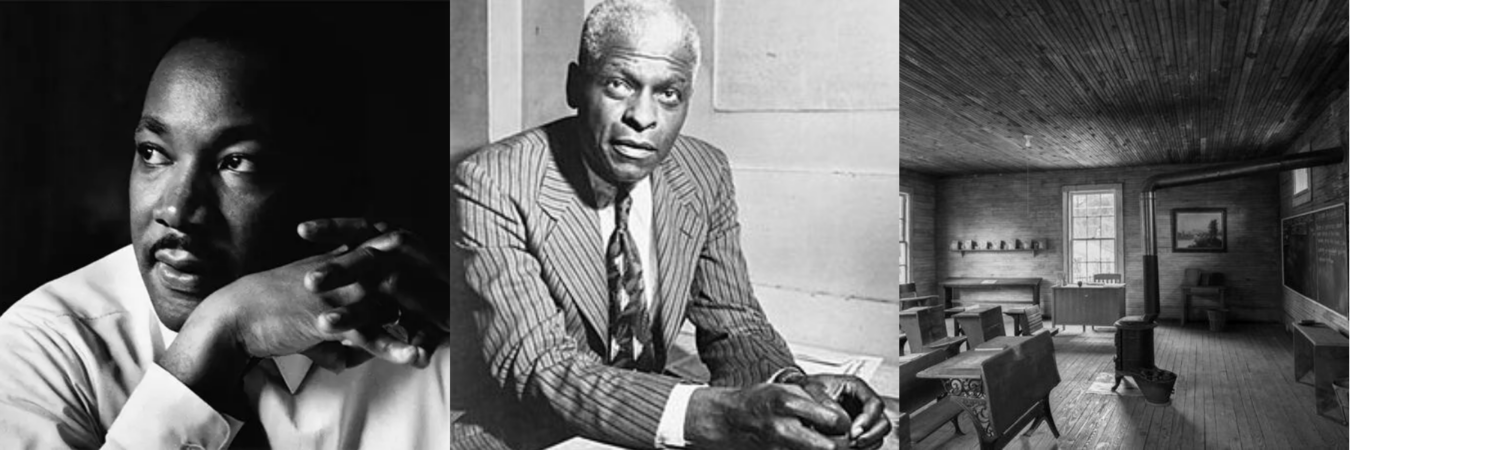

Rural education was a foundational pillar for Mays. Mays profoundly shaped King, and King changed the world.
Could it be then that the impact of the Civil Rights movement and ongoing progress towards Beloved Community stands on the shoulders of untold schools and communities in the Black rural South who shed blood, sweat, and tears in paving the way for a brighter day? From dirt roads and church benches to cotton fields and front porches emerged trailblazers who compelled this nation to make good on its promises. Today, rural schools serve one in five American students—nearly 10 million children. Yet they are largely overlooked, receiving only 17 percent of state education funds despite comprising a quarter of all schools. And while rural residents make up nearly 20 percent of the U.S. population, only 7 percent of private philanthropic giving goes to rural communities.
Having grown up myself in a one-building K-12 school in Ringgold, Louisiana, I know that, complementing family and church, schools are the foundation, epicenter, and pipeline of community and economic development in rural areas. My great-great-great-grandmother donated the land to establish the first school for Black children near my hometown. Separately, one of my great-great-great grandfathers was a farmer and pastor in Lincoln Parish, where members of the North Louisiana Colored Agriculture Relief Association wrote to Booker T. Washington requesting assistance from Tuskegee to start a college. That school, founded in 1901 and reorganized in 1936 to focus on rural teacher education, is now more widely known as Grambling State University – home of the “World Famed Tiger Marching Band” and a gateway to opportunity for generations.
So this month, as we commemorate our nation’s most notable Civil Rights leader and one of the world’s greatest nonviolent advocates, let us not forget the rural-born educator who helped him climb that mountaintop. May we never dismiss the Black rural South that, in spite of its systemic disenfranchisement, cultivated the minds of John Lewis, Ella Baker, Fannie Lou Hamer, Robert J. Jones, Zora Neale Hurston, Vivian Pinn, Percy Hunter Jones, Bennie Thompson, B.B. King, Billy Ray Ballard, Lee Arthur Smith, Juliette B. Bell, Charles Blow, and many of the world’s finest artists, scholars, and civic leaders. And may our country commit to better honoring and investing in the countless rural educators and public schools nurturing the next generation of young people who will redeem the soul of our nation.
“His Name Was Martin” was composed by jazz pianist and educator Billy Taylor as part of his Peaceful Warrior suite, commissioned by the Atlanta Symphony in honor of Dr. Martin Luther King Jr. This performance features Tay’s original arrangement of the work, created in collaboration with Dr. Willis Delony, LSU Boyd Professor of Piano and Jazz Studies. The introduction references “Precious Lord, Take My Hand,” Dr. King’s favorite and last requested hymn, and the piece concludes with “We Shall Overcome.”

The National Student Clearinghouse Research Center released its 14th annual High School Benchmarks report on September 17, 2026, tracking where...

If you’re overwhelmed by education debt, you may be asking, “Can I file bankruptcy on student loans?” The answer is...

A dividend is a cash payment a company sends to shareholders, quarterly for most U.S. stocks. Reinvested dividends account for...