“Nobody’s Coming to Save Us” Book Tour | Joy Reid & Dr. Wes Bellamy

by Taylor Frazier | Photos by Millz with the Cam
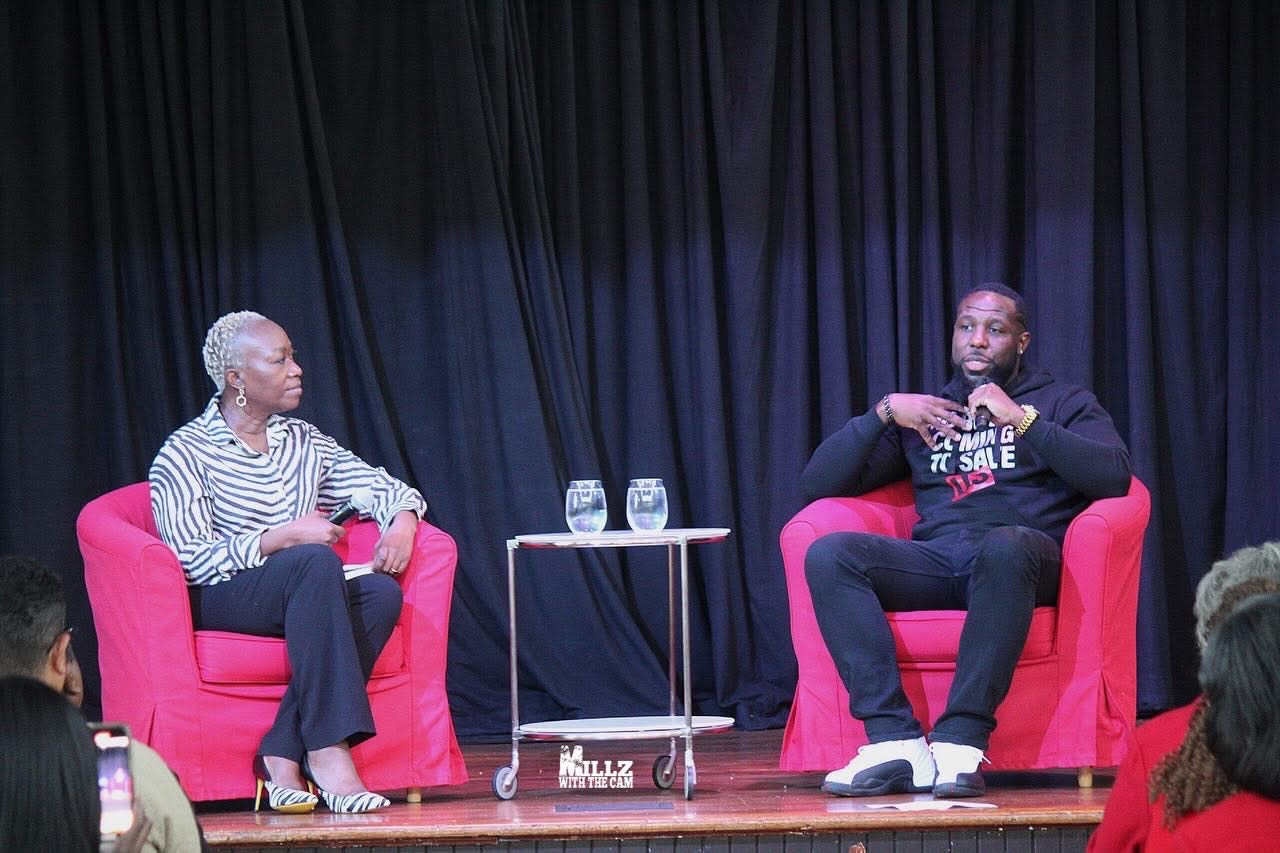
On November 23rd, the Jefferson School African American Heritage Center buzzed with community members welcoming award-winning author Dr. Wes Bellamy and political commentator Joy Reid for
“Activist: A Collective Conversation on Leadership, Purpose, and Action”. Hosted by the Charlottesville Alumnae Chapter of Delta Sigma Theta Sorority, Inc., the event embodied one of the chapter’s core missions: social action and community engagement. An impactful performance by DxD Dancers and a Black Leaders panel discussion, centered on key themes from the book, created the perfect atmosphere for the upcoming discussion.
As a nationally recognized activist, entrepreneur, and former Vice Mayor and City Council member of Charlottesville, Dr. Bellamy has written and directed several projects focused on civic awareness and action. His latest work, “Nobody’s Coming to Save Us: The Blackprint for Leadership”, is a literary call-to-action encouraging the Black community to mobilize and enact decisive leadership and change within their own communities, rather than relying on others. Moderating the discussion was Joy Reid, an acclaimed political commentator and host of the “The Joy Reid Show” podcast. As a former commentator for MSNBC’s “The ReidOut,” Reid has authored several award-winning books, including her latest, “Medgar and Myrlie: Medgar Evers and the Love Story That Awakened America.”
“Nobody’s Coming to Save Us: The Blackprint for Leadership” is part autobiography, part workbook, and showcases how lessons learned from Dr. Bellamy’s life can empower Black communities. One key theme is seeking validation, highlighted through this excerpt:
“Usually, I sought validation where a woman who told me the things that I wanted to hear. I didn’t do drugs, I didn’t drink alcohol, never smoked weed, never smoked a cigarette. I never did much of anything in that realm. My vice was always validation from women. Validation was my addiction.”
Reid used this quote to emphasize Dr. Bellamy’s shift in mindset, finding fulfillment in public service as a means of “filling the hole” left by the lack of validation as a child. He emphasizes the importance of doing the internal work in being mindful in the search for something, and cautions us not to become the things we are fighting against.
Delving deeper into the book, Dr. Wes Bellamy recounts his experience of moving to Charlottesville and starting a boxing club as an initiative to help the youth express themselves in other ways. As time went on and Dr. Bellamy became more involved in running for council, the boxing club began to evolve as the students grew into the next generation of leaders. Dr. Bellamy said that it highlighted an essential aspect of leadership: transferring your skills to others so they can perform the work independently. Drawing from the Black Leaders Panel, he stated that leadership is not always evident; sometimes, leaders must do the hard work in the background to allow others to lead upfront. Both Dr. Bellamy and Reid discussed the need to distinguish between performative leadership and actual leadership, and the detriment that the former poses in this era of social media.
The conversation reflects the broader commentary on leadership as a bottom-up initiative that begins with those within the community. It’s not something that can be given simply. It’s more important that people understand the foundations of leadership and how to develop leaders today to enact the change people want to see tomorrow.
This event was sponsored by the Black Professional Network of Charlottesville, Can I Talk to You CVille, In My Humble Opinion Talk Show, Vinegar Hill Magazine, and The Jefferson School of African American Heritage Center.
Texas public schools lost about 76,000 students in the 2025-26 school year, the first enrollment decline outside the Covid-19 pandemic...

If you’re considering a home equity loan and wondering whether you can deduct the interest on your taxes, the answer...

Articles Single-family rentals (SFR) now house 41% of the U.S. renter population, according to Rentometer Mid-Year...