Standing in Hope and Gratitude: Leading With Vulnerability and Purpose
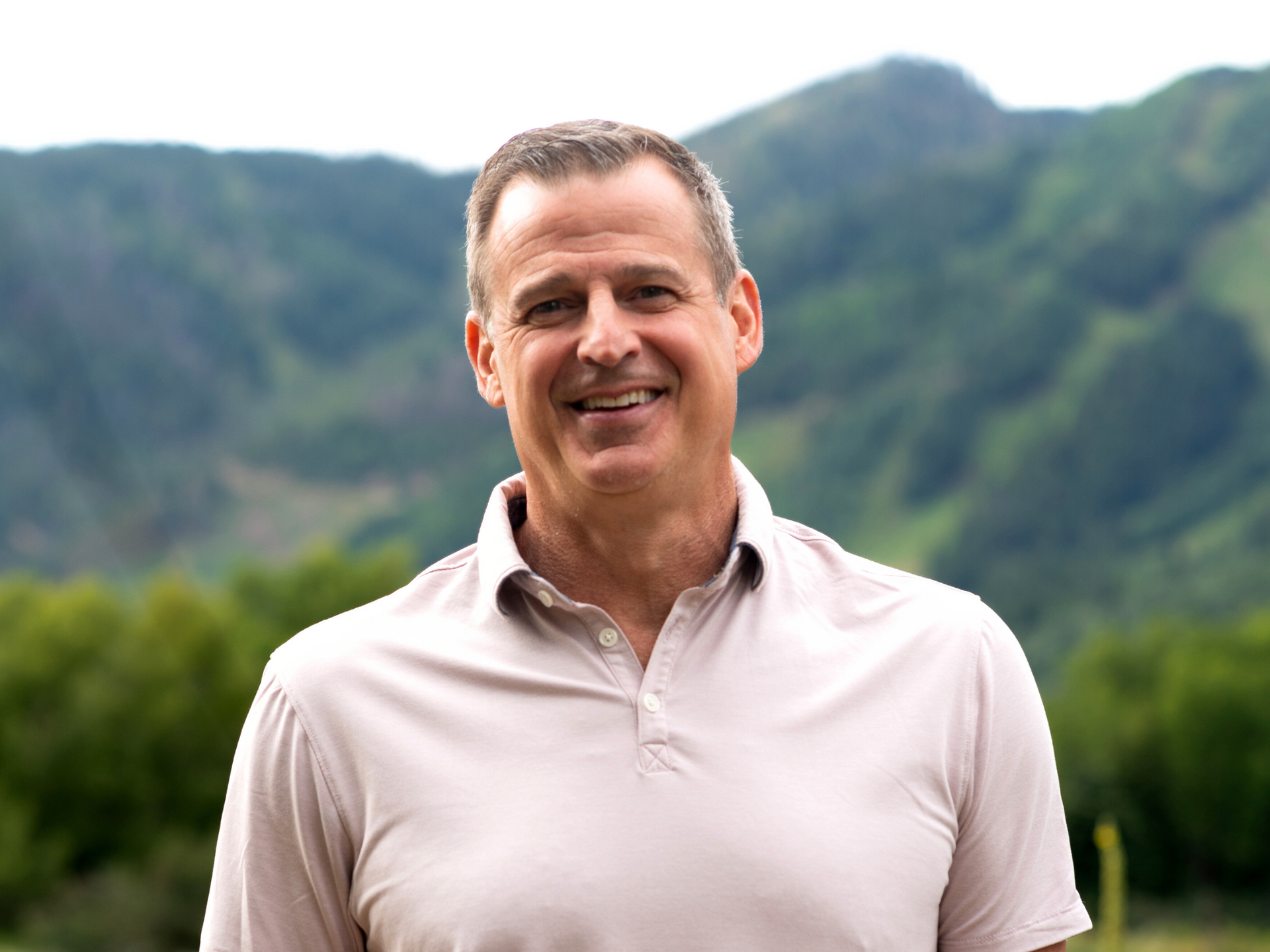

Michael O’Neil has spent the past two decades reshaping how people engage with their own health. As Founder and CEO of GetWellNetwork, he pioneered the field of Interactive Patient Care, creating technology that gives millions of patients around the world a meaningful voice in their care journey. His work has helped change how hospitals, clinicians, and families think about patient engagement, empowering people to take an active role in their health.
Beyond GetWellNetwork, Michael collaborated with fellow Aspen Health Innovators Fellows John Damon (CEO, Canopy Children’s Solutions) and Dale Cook (Founder & CEO, Learn to Live) to create Canopy Anywhere—a tech-enabled platform delivering holistic mental health support—in response to the youth mental health crisis. He serves as Executive Chairman of PerfectServe, a clinical communications company based in Knoxville, Tennessee. He is also the Founder and Co-Executive Director of Graybridge, a nonprofit dedicated to improving racial unity in schools and workplaces. His entrepreneurial leadership has earned him national recognition, including E&Y Entrepreneur of the Year and Social Impact Entrepreneur of the Year by the Global Good Fund.
Michael is a Health Innovators Fellow, Class V, and a member of the Aspen Global Leadership Network. We spoke with him at the 2025 Resnick Aspen Action Forum to learn more about his leadership journey, the challenges he is committed to solving, and the values that ground him.
Answers have been lightly edited for length and clarity.
Tell us about your leadership journey and any lessons you’ve learned along the way.
My leadership journey started when I was a little baby. I grew up in a house full of entrepreneurs. My mom owned a group of special needs preschools in upstate New York, and my dad owned a consulting practice that taught total quality management to some of the largest organizations in the world. So I grew up surrounded by entrepreneurial and change agent leadership. In some ways, it was born into me. The question was just what path I would take.
While I was in graduate school at Georgetown studying law and business, I was diagnosed with non-Hodgkin’s lymphoma at age 28. That moment laser focused what I valued and how I wanted to use those values to make an impact. Coming out of that experience, I founded GetWellNetwork in 2000 to help people take a more active role in their health journey. Since then, we have reached about 85 million healthcare patients around the world.
It has been quite a journey through life and leadership, and I am very grateful for all of it.
What’s the problem you’re committed to solving, and what actions are you taking to make progress?
All of us have seen the youth mental health crisis unfolding across the United States and around the world. Through my [Aspen] Fellowship, I met other leaders who wanted to think differently about this challenge. The idea that we can simply train enough therapists to meet the need is not realistic. It would take too long, and too many young people would go without support.
So we are working on something that might sound a little wild. We are tech-enabling the science of hope. There is a 30-year body of research buried in psychology journals that shows how hope can change the way people navigate challenges. We are lifting that science out of the journals, building technology on top of it, and working to bring it to thousands, and hopefully millions, of young people.
The goal is to give them tools to navigate life proactively, before their challenges escalate into self-harm or crisis.
What keeps you going, especially during difficult moments?
Sustaining the energy it takes to do impact work at scale comes from two things for me.
The first is a tactical, almost militant morning routine. My life philosophy centers on six things: sleep, nutrition, exercise, mindfulness, human connection, and purpose. Five of those six elements I work into my morning routine, between 6:30 and 7:30 each day, so I can spend the rest of my day running at purpose.
The second is grounding myself in hope and gratitude. I spend my life working in healthcare, reading about advanced sciences and innovations, but there are two sciences that keep me going every single day. One is the science of hope, and one is the science of gratitude. When I stand in those two spaces intentionally, there is an endless amount of energy and possibility to move toward.
If you were to write a letter to your younger self, what would you say?
I would tell my younger self that you can be your full self throughout your leadership journey. No mask. Bring your talents and your instincts, but also bring your flaws. I have learned that vulnerability, not power, is the real secret sauce to leading through impact and change. Aspen helped reinforce that lesson for me in the most powerful way.
What would you tell your future self?
I would remind my future self that work-life balance is not the goal. It is more about work-life blend. If you can fuse the way you want to live with the work you want to do, you’ll never tire of it. You can think big and work small toward your purpose every day without burning out.
Fusion creates energy. Separation drains it.
About the Aspen Global Leadership Network
The Aspen Global Leadership Network (AGLN) is a dynamic, worldwide community of nearly 4,000 entrepreneurial leaders from over 60 countries. Spanning business, government, and the nonprofit sector, these leaders share a commitment to enlightened leadership and the drive to tackle the most pressing challenges of our times. Through transformative Fellowship programs and gatherings like the Resnick Aspen Action Forum, AGLN Fellows have the unique opportunity to connect, collaborate, and challenge each other to grow and commit to a lifelong journey of impact.
More from 2025 Resnick Aspen Action Forum
In July 2025, over 500 leaders across the Aspen Global Leadership Network (AGLN) community gathered for our largest Action Forum to date. Joined by nearly 100 young leaders, AGLN Fellows from more than 30 countries returned to the enduring questions first posed at at the founding of the Aspen Institute 75 years go: What does it mean to lead with purpose in times of profound uncertainty?
Explore more inspiring content on leadership and change-making from the 2025 Action Forum here.

About three out of every four Americans have rewards credit cards. They like the perks that come with these cards,...
Author Rod Khleif: Top Multifamily Real Estate Mentor, Best Selling Author & Host of Top Real Estate Investing Podcast I...

Blog Posts Archives UnfavoriteFavorite August 28, 2026 Weave: The Social Fabric Project Subscribe to Weave’s Newsletter This story was originally...